An undergraduate law program, or LLB, gives students a basic knowledge of the laws, principles, and practices. In many countries, such as India, it's far the bare minimum of qualifications that is needed to practice in the court of law. Fundamental topics covered in civil law, constitutional law, criminal law, and legal procedures. After completing an LLM program, students may get various opportunities to choose a position in the government or corporate sectors. Before enrolling in an LLB program, one must need to attempt an entrance exam and qualify it as well which is required by the university at the time of admission.
What is LLM?
LLM is a postgraduate degree pursued after choosing one specialization in which students wish to gain additional knowledge on certain subjects or any particular domain. It enables attorneys to focus on the areas of the law, including intellectual property, business law, international law, or human rights. LLM improves legal expertise for academic, consulting, or high-level professional employment and is frequently research-focused. Various universities offer LLM programs after graduation with a scorecard of the entrance exam asked in the eligibility criteria for the respective university that the students wish to be admitted to.
Difference between LLB and LLM
Well, the first difference is that one is an undergraduate program and the other is a postgraduate program. Let's learn more about both programs with the help of the table below:
|
Criteria
|
LLB
|
LLM
|
|
Definition
|
An undergraduate degree for law students that allows students to gain fundamental knowledge regarding legal studies, practices, and principles.
|
After completion of the LLB program (3 or 5 Years), students choose any particular specialization under which they wish to advance their studies in the law field.
|
|
Full form
|
Bachelor of Legislative Law
|
Master of Laws
|
|
Academic level
|
Undergraduate Program
|
Post-graduate program
|
|
Eligibility criteria
|
- After completion of 10+2, this program needs 5 years to complete, and if graduation is completed, then it is a 3-year course.
- Minimum marks must be 55%
- Entrance exam may or may not required
|
- Must have completed LLB or equivalent law degree.
- Minimum marks - 55%
- Entrance exam may or may not required
|
|
Entrance exam
|
- CLAT (Common Law Admission Test)
- LSAT India (Law School Admission Test)
- AILET (All India Law Entrance Test)
- SLAT (Symbiosis Law Admission Test)
- And few others are state-level entrance exams
|
- CLAT PG (Common Law Admission Test for Postgraduate)
- CUET PG (Common University Entrance Test for Postgraduate)
- LSAT India (Law School Admission Test)
- AILET PG (All India Law Entrance Test)
- AMUEE (Aligarh Muslim University Entrance Exam)
- AIBE (All India Bar Examination)
- And a few others
|
|
Duration of the program
|
The duration of an LLB program is generally 3 years
|
The duration of an LLM program is generally 2 years
|
|
Options Available
|
|
- Regular LLM
- Distance LLM
- 1-year LLM
- LLM for working professionals
- LLM distance learning program
|
|
List of top Universities
|
- National Law School of India University, Bangalore
- National Law University, Delhi
- Nalsar University of Law
- NLU Kolkata - The West Bengal National University of Judicial Sciences
- Symbiosis Law School, Pune
- Faculty of Law, Jamia Millia Islamia
- IIT Kharagpur - Indian Institute of Technology
- Gujarat National Law University, Gandhinagar
- Babasaheb Bhimrao Ambedkar University (BBAU), Lucknow
- Jindal Global Law School (Blended Learning Program)
- National Law University, Delhi
- Lovely Professional University
- UPES
|
- National Law School of India University, Bangalore
- National Law University, Delhi
- Nalsar University of Law
- NLU Kolkata - The West Bengal National University of Judicial Sciences
- Symbiosis Law School, Pune
- Faculty of Law, Jamia Millia Islamia
- IIT Kharagpur - Indian Institute of Technology
- Gujarat National Law University, Gandhinagar
- Babasaheb Bhimrao Ambedkar University (BBAU), Lucknow
- Jindal Global Law School (Blended Learning Program)
- National Law University, Delhi
- Lovely Professional University
- UPES
|
|
Who should pursue
|
Students who are law enthusiasts and interested in understanding the legal field
|
LLB degree holders, if they wish to further their knowledge in a specific subject or domain
|
|
Bar council registration
|
Eligible after completion of LLB program
|
Already eligible (LLM not required for practice) as they have completed the LLB program
|
|
Purpose
|
To get fundamental knowledge about legal studies
|
To get specialized learning on any particular subject
|
|
Career options
|
- Lawyer
- Litigation lawyer
- Corporate counsellor
- Teaching
- Company Secretary
- Judiciary
- Government services
- Legal Executive
- Criminal defence lawyer
- Legal analyst
- Legal journalist
- Advocate
- Legal writer
- Law professor
- Public prosecutor
- Judge
- Legal researcher
- Company Secretary
|
- Legal Support Officer
- Subdivision Magistrate
- Chief Justice
- Notary Officer
- Legal researcher
- Legal writer
- Corporate Lawyer
- Trade Commission Head
- Legal analyst
- Journalist
- Senior Advocate
- Civil Judge
- Legal Officer
- Judge
- Bar Council Executive
|
|
Specializations offered
|
- Criminal Law
- Intellectual property law
- Family law
- Corporate law
- Environment law
- Taxation law
- Labor law
- Media Law
- Civil Law
- Corporate and governance law
- Human rights law
- Energy Law
- Property law
|
- Business laws
- Constitutional Law
- Criminal Law
- Property law
- Human Rights
- IPR & Tech Law
- Family Law
- Media Law
- Civil Law
- Corporate and governance law
- Energy Law
|
|
Syllabus (Core Subjects)
|
- Labor Law
- Family Laws II
- Family Law I
- Law of Tort & Consumer Protection Act
- Crime
- constitutional Law
- Women & Law
- Professional Ethics
- Law of Evidence
- Jurisprudence
- Human Rights & International Law
- Practical Training - Legal Aid
- Environmental Law
- Property Law including the transfer of Property Act
- Arbitration, Conciliation & Alternative
- International Economics Law
- Civil Procedure Code (CPC)
- Code of Criminal Procedure
- Interpretation of Statutes
- Company Law
- Legal Writing
- Practical Training - Moot Court
- Land Laws including ceiling and other local laws
- Practical Training II - Drafting
- Administrative Law
- Criminology
- Family Law I
- Law of Crimes
- Law of Contract I
- Constitutional Law I
- Women and Law (Elective)
- Criminology and Penology (Elective)
- RTI and PIL (Elective)
- Law of Evidence
- Arbitration, Conciliation, and Alternate Dispute Resolution System
- Legal Language
- Jurisprudence
- Taxation Law
- Tort and Consumer Protection Act, Motor Vehicle Act
- Drafting, Pleading, and Conveyancing
- Interpretation of Statutes
- Administrative Law
- Company Law
- Code of Criminal Procedure Limitation Act
- Banking Laws
- Property Laws
- Banking Laws
- IPR
- Environmental Law
- Code of Criminal Procedure, Juvenile Justice Act, and Probation Offenders Act
- Practical Training and Moot Courts
- Family Law II
- Law of Contract I|
- Constitutional Law II
- Professional Ethics, Bar Bench Relations, and Accountancy for Lawyers
- Law and Media (Elective)
- Election Law (Elective)
- Healthcare Law (Elective)
|
- Legal research methodology:
- Legal research & writing
- The legal system: Foundations, institutes & Processes
- Statutory Law & Interpretation
- Case las & Precedents
- Judicial Public Policy Making: Common Law & Judicial Activism
- Research in a law Firm; Due Diligence, Memos & Advice
- Law and Justice in the Globalizing World:
- Globalization and its Effects on the Development of International Commercial & Economic Law
- Challenges of Globalization to Law & Justice
- Formulation to Law & Justice
- Formulation & settlement of transportation norms & practices.
- Individual rights vis-a-vis Free market principles & state capitalism
- Comparative public law:
- Public and private law in practice
- Building an imagination sound comparative, constitutional, and public law
- The unique position of international investments within public law and the legal principles governing it
- How domestic law responds to foreign investments and the significance of capital flow for development
- Investment contract regime and general threats to investments
- Law and Social Transformation in India
- Judicial Process
- Indian Constitutional Law: The New Challenges
- Law of Industrial and Intellectual Property
- Legal education and research Methodology
- International Trade Law
- Environmental Law
- Legal Regulations of Economic Enterprises
- Business Laws
- Law Relating to Regulatory Authorities
- Insurance Law
- Alternative Dispute Resolution & Securities Law
- Administrative Process and Judicial Control
- Law and Social Transformation in India
- Administrative Law
- Constitutionalism: Pluralism & Federalism
- Human Rights
- Indian Constitutional Law: The New Challenges
- Research Methodology
- National Securit, Public Order, and Rule of Law
- Mass Media Law
- Judicial Process
- Research Methodology
- Legal Concepts
- Theories of Law
- Banking Law
- Legislative Process
- Corporate Jurisprudence
- Law of Intellectual Property
- Life and Fire Insurance
- Consumer Law
- Judicial Process
- Competition Law
|
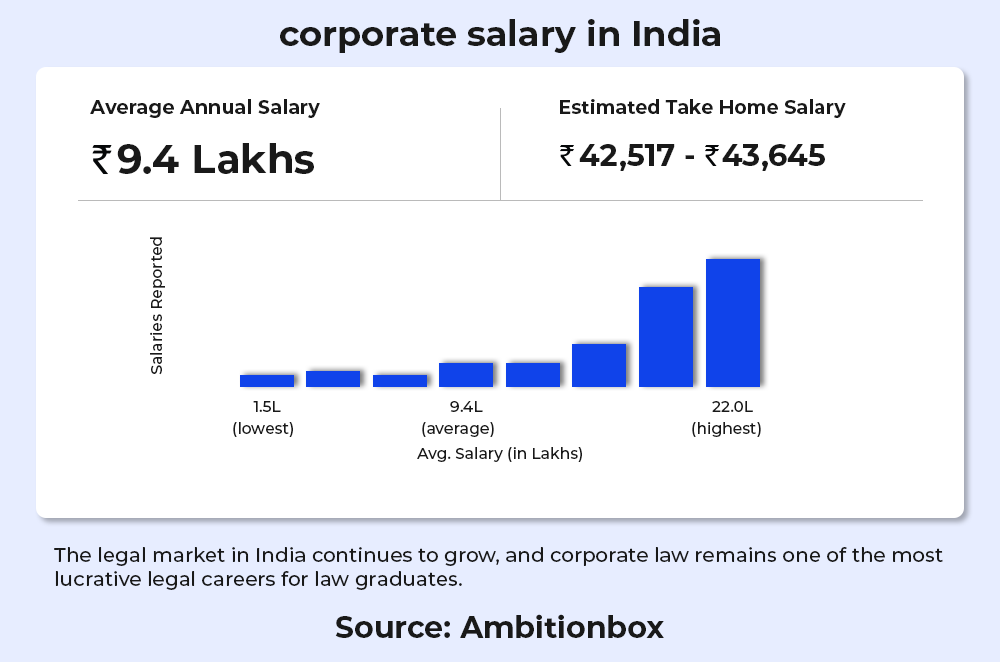
As we know, lawyer get more value after completion of their Master’s program (an LLM), Let’s check out their salary packages for a few posts. Salary packages after completing an LLM program:
|
Sr. No.
|
Position
|
Salary
|
|
3.
|
Judiciary
|
INR 1 LPA to INR 25 LPA
|
|
6.
|
Corporate counsellor
|
INR 9 LPA - INR 5 LPA
|
|
1.
|
Lawyer
|
INR 1 LPA -INR 10 LPA
|
|
4.
|
Junior advocate
|
INR 10,000 per month to INR 25,000 per month
|
|
5.
|
Legal advisor
|
1 LPA to INR 14 LPA
|
|
10.
|
Patent analyst
|
INR 4 LPA to INR 6 LPA
|
|
2.
|
Journalist
|
INR 1-8.2 LPA
|
|
7.
|
Legal Analyst
|
INR 2.1 LPA to INR 10.6 LPA
|
|
9.
|
Legal writer
|
INR 1 LPA to INR 6.9 LPA
|
|
8.
|
Legal researcher
|
INR 21,000 - INR 50,000 per month
|
Universities offering LLM programs for working professionals?
Working professionals who would love to get a better understanding of any particular subject in the legal field should pursue this program. This program is developed in a manner that people who wish to work and want to study side by side to get into the depth of the subject should pursue this course. Let’s know about the universities that are offering this program.
|
Universities offering LLM programs for working professionals
|
|
Kurukshetra Univerity
|
Jamia Millia Islamia
|
|
KUVEMPU University
|
Jindal Global Law School
|
|
Karnataka State Open University
|
Banaras Hindu University
|
Universities offering 1-year LLM programs
There are a few universities that offer 1-year LLM programs to the students. Let’s learn about those universities and their offered specializations.
|
Top colleges offering a 1-Year LLM program
|
|
Colleges
|
Specializations
|
|
Jindal Global Law School (Blended Learning Program)
|
- Corporate & Financial Law
- AI and Emerging Technologies
- Intellectual Property & Technology Law
- Dispute Resolution
|
|
National Law University, Delhi
|
- Criminal Law
- Banking and Finance Studies
- Intellectual Property Law
- Commercial Law
- Environmental Law and Justice
- Consumer Law
- Health Law and Policy
- Taxation Law
|
|
Lovely Professional University
|
- Business Law
- Constitutional Law
- Criminal Law
- Intellectual Property Law
- International Law
|
|
Symbiosis Law School International, Pune
|
- Business and Corporate Law
- Constitutional Law and Administrative Law
- Innovation, Technology, and Intellectual Property Law
- Criminal Law and Security Law
- Human Rights Law
- Law, Policy, and Good Governance
- Family Law
- EU Law and International Law
- Telecommunication, Media, and Technology Law
- Climate Change Law and Policy* (Approval in process)
|
|
NLU, Kolkata
|
- Corporate and Commercial Law
- International Law & Comparative Law
- Criminal and Security Law
- Intellectual Property Law
- Law and Technology
|
|
UPES
|
- Corporate and Commercial Law
- Alternate Dispute Resolution
- Intellectual Property Rights
- Environmental and Energy Law
- Cyber Security and Digital Law
|
LLM 1-year program fees for various institutions
|
LLM 1-year program fees for various institutions
|
|
Institutions
|
Total Fees
|
|
Jindal Global Law School (Blended Learning Program)
|
INR 3,50,000
|
|
National Law University, Delhi
|
INR 1,25,000
|
|
Lovely Professional University
|
INR 1,60,000
|
|
Symbiosis Law School International, Pune
|
INR 2,50,000
|
|
NLU, Kolkata
|
INR 1,39,000
|
|
UPES
|
INR 2,79,000
|
Jindal Global Law School (Blended Learning Program)
Jindal Global Law School is one of those universities that offers 1-Year LLM program. Additionally, they offer this program in a blended learning mode. This implies that the learner has access to both hyrid and offline learning environments. With the use of videos, case studies, assignments, live sessions, and projects, students may learn from top academics and professionals in the field. Let's learn about the Jindal Global Law School’s eligibility criteria, fee structure, and a few more things.
Fee structure:
Eligibility criteria:
- Applicants must have earned a Bachelor of Laws degree, which must be LLB, within three and a half years, or be in their last year.
- To be excused from the admission exam (JSAT), candidates must have passed entrance tests such as the LSAT, CLAT PG, or DU LLM exam within the last 12 months at the time of application.
- Candidates will also be excused from the admission exam (JSAT) if they hold a valid LSAT international score within five years of the time of application.
Specialization offered:
Syllabus offered by the Institution
Below is the syllabus offered by the Jindal Global Law School for each of the specializations offered by the institution:
|
Specializations and syllabus at Jindal Global Law School (Blended Learning Program)
|
|
Specializations
|
Syllabus/Subjects
|
|
Corporate & Financial Law
|
- Legal Research Methodology
- Law and Justice in a Globalizing World
- Comparative Public Law
- Advanced Company Law
- A Practitioner’s Approach to Competition Law in India
- Commercial Contract Drafting
- M&A and Private Equity
- Corporate Insolvency Law
- Dissertation
|
|
AI and Emerging Technologies
|
- Legal Research Methodology
- Law and Justice in a Globalizing World
- Comparative Public Law
- Advanced IPR and IT Law
- Intellectual Property and New Technology, AI
- GDPR: A European Example of Data Protection Law, AI Introduction to GDPR
- Regulating AI
- Ethica, Law, and AI
- Comparative AI Regulation
- Dissertation
|
|
Intellectual Property & Technology Law
|
- Legal Research Methodology
- Law and Justice in a Globalizing World
- Comparative Public Law
- Advanced IPR and IT Law
- Intellectual Property and New Technology, AI
- Music and Copyrights
- TRIPS and Public Health
- GDPR: A European Example of Data Protection Law
|
|
Dispute Resolution
|
- Legal Research Methodology
- Law and Justice in a Globalizing World
- Comparative Public Law
- International Commercial Arbitration
- Principles and Practice of Arbitration in India
- Investment Arbitration
- Negotiation and Meditation
- Recognition, Enforcement, and Execution of Arbitral Awards
- Ethical Issues in Alternative Dispute Resolution
- Dissertation
|
|
Taxation Law, Policy and Regulation
|
- Structure and implementation of GST
- Registration, compliance, valuation, and input credit mechanisms
- Audit and appeals processes under indirect tax laws
- Legal and procedural aspects of Customs regulations
- Import-export duties and Special Economic Zones (SEZs)
- Enforcement mechanisms and recent legal developments
- Use of technology in tax administration - theory and practical insights
|
Conclusion
In this blog, students get to learn about the differences between the two programs i.e., LLB and LLM. however, it is quite clear that one is an undergraduate program and the other one is a master’s program. But still, some students are new to these terms and programs. This blog helped them to know the difference between the two. Additionally, students get to know about the specializations and the syllabus that they may get to learn under these programs.