
Compare in 2 mins










India's leading Online Universities on a Single Platform within two minutes
Compare & Apply from 100+
Dispute Resolution Universities

Get an
Online Discount of 15%

College Vidya Promise
Lowest Price Guarantee
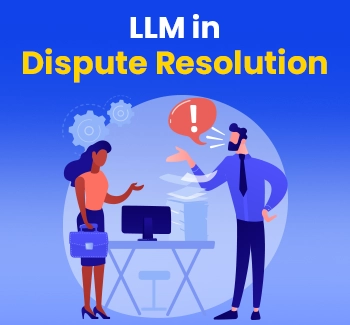
LLM (Master of Laws) in Dispute Resolution Course Subjects/Syllabus
Adhere the LLM in Dispute Resolution program syllabus, which tells what it covers while learning; there is a general detailed syllabus; go through it.
|
LLM In Dispute Resolution Syllabus |
|
|
Legal Research Methodology
|
Law and Justice in a Globalising World
|
|
Comparative Public Law
|
International Commercial Arbitration
|
|
Principles and Practice of Arbitration in India
|
Investment Arbitration
|
|
Negotiation and Mediation
|
Recognition, Enforcement, and Execution of Arbitral Awards
|
|
Ethical Issues in Alternative Dispute Resolution
|
Dissertation
|
Will AI Take My Job?
9 out of 10 Profiles Needed Attention! Access Yours!
Thousands of Users Already Accessed Their AI Career Threat Report!

 FAQ's
Let's clear up some doubts
An master’s program in law in the specialization of dispute resolution equips you with the negotiation skills to solve conflicts or disputes among people or commercial businesses outside the courtroom in a legal manner. Also, the career benefits of this field are quite high & make you move a step ahead toward your professional goals.
The admission process to an master’s program in dispute resolution is entirely dependent on the university. Some universities conduct entrance exams like JSAT-LAW for the enrollment of students while others offer direct admission to the course.
Students who have completed their bachelor’s in law (LL..B.) or professionals who are working in legal firms after their graduation can opt for an master’s course in dispute resolution.
After completing your LL.M. program (dispute resolution), you can secure a high-paying job in either government or private legal firms. You can work as a legal consultant, mediator, or arbitrator in different sectors of the industry. Top-ranked MNCs also hire LL.M. degree holders for their legal departments.
An degree in LL.M. in the specialization of dispute resolution costs around 3-3.5 Lakhs when opted from a government-recognized university. The exact amount of fee for this program is university specific & is subject to change. Candidates can obtain information regarding this from the university’s official website.
The average annual package of Legal Arbitrators depends on their skill, experience, & on the organization they are going to join. However, in Indian Council Arbitration, the average salary package is 5.4 LPA.
Most universities offer different types of training programs as an integral part of their course structure including communication skill development programs, resume building, mock interviews, webinars with industry experts, & many others. These extra-curricular programs of the course are quite helpful in your professional grooming & ultimately aim to land you in your dream company.
Checklist I Wish I Had Before Enrolling

College Vidya Smart Choice Checklist
A checklist to help you reach your goal!
Compare Universities
vs
Add To Compare
vs
Add To Compare
vs
Add To Compare

Get the right guidance with us
Download the app



Online & Distance MBA
Online & Distance Best University for
Online & Distance UG Courses
Online & Distance PG Courses
General



College Vidya is an independent education guidance platform designed to help learners compare, evaluate, and make informed decisions about accredited online and distance programs. We do not directly conduct academic programs. All admissions, curriculum structures, fee details, approvals, scholarships, and placement policies are managed and executed by the respective universities or institutions. We aim to keep information accurate and updated. For complete and official details, learners are encouraged to connect with experts from College Vidya. Our role is to simplify research and provide structured guidance throughout the decision-making process.
© 2026 College Vidya, Inc. All Rights Reserved
Built with Made in India