

Hiring the right candidates is the foundation of any business. Recruiting talented candidates for the job role is a crucial role of Human Resource Management. Because the quality of people hired today directly shapes an organization's performance, culture, and future success. Without effective recruitment, even the most brilliant business strategies can fail due to a lack of capable talent to execute them.
The recruitment process has undergone a complete transformation because organizations now use technology-based methods, which include AI-powered applicant tracking systems, data-driven decision making, predictive analytics and virtual hiring processes instead of traditional methods, which included newspaper advertisements, campus visits and walk-in interviews. AI- powered tracking systems resolve the issue of geographical boundaries. This digital transformation has changed not just how organizations find candidates, but how they assess fit, predict performance, and measure recruitment effectiveness.
Thus, there is a demand for HR professionals who combine traditional skills with technical and analytical skills. Organizations are looking for HR professionals who can interpret hiring metrics and work with new recruitment automation and systems. With the rise of Data Analytics and digital transformation, HR professionals are expected to go beyond traditional hiring practices. Embracing a more strategic and technology-enabled approach to talent acquisition is required. This leads to demand for courses like HR Management, HR Analytics, Marketing and HR Management, Data Analytics, and B.Tech in Computer Science for Working Professionals.
What is Recruitment in HRM?
Recruitment in Human Resource Management refers to the process of identifying, attracting, and connecting with qualified candidates to fulfill the vacancies in the organization. Also, encouraging the capable candidates to apply for the job role by negotiating salaries based on their skills and the requirements of the company.
The recruitment process involves two tasks:
- Selecting potential candidates
- Finding the most suitable candidates through assessment, interview, and evaluation methods.
Organizations use recruitment to find potential candidates whereas they use selection to choose candidates who best meet their requirements. The complete hiring process starts with recruitment, which leads to the selection phase. Organizations depend on recruitment to provide ongoing talent resources that help them achieve their present and upcoming requirements. Organizations can achieve better results through recruitment practices that enable them to fill positions that need qualified candidates with benefits like:
- Time-to-hire
- Lowers hiring costs
- Improves quality of hire
- Strengthens employer brand
Modern recruitment has developed into strategic talent acquisition which requires organizations to implement long-term workforce planning that matches their business needs. Strategic talent acquisition goes beyond basic vacancy filling because it creates talent pipelines through workforce planning, employer branding development, and continuous candidate relationship management.
The shift demonstrates that organizations need to treat recruitment as a strategic process that creates direct business results instead of an administrative task. Online MBA in HR Management provides advanced knowledge of strategic recruitment planning through their studies of recruitment methods which link to business objectives and future workforce needs.
Types of Recruitment in HRM
Here are the Internal Recruitment Methods mentioned:
Internal Recruitment Methods
Internal recruitment methods involve filling vacancies by using existing employees as potential candidates. This method gives preference to the current talent pool and provides opportunities for growth to employees.
Transfers allow an organization's ability to utilize a particular employee in multiple capacities through moves within (or between) departments, locations, or projects without changing his/her level of responsibility within the organization. Transfers provide the organization with the ability to optimize the use of their employees' skills and experience as well as to give their employees' a broad array of work experience. An example of this would be if a sales professional working out of the Mumbai office was transferred to work in the Bangalore office or if a member of the Finance team were to be moved into the Operations Finance division.
Promotions are the most commonly utilized type of internal recruitment. Employees are promoted into higher-level positions with increased responsibilities, titles, and pay. Organizations utilize promotions as a way to reward employees for their performance and to offer them opportunities for advancement while ensuring that the organization continues to fulfil their staffing needs by filling higher-level positions with employees who are already familiar with the organization's culture and business operations. An example of this would be if a Marketing executive were promoted to a Marketing Manager position or if a Senior Software Engineer were promoted to a Technical Lead position.
Employee referrals, companies want reliable candidates, so they use current employees' networks to find potential candidates. Organizations establish referral systems through incentive programs which provide bonuses when referred candidates complete their probationary period and receive successful hiring. This method works particularly well because employees understand both the organizational culture and the requirements of various roles, which leads to better quality matches.
The internal job posting where organizations must first announce internally any new open positions before looking to fill the position externally. Companies utilize their intranet system, bulletin board postings, and internal communications as the primary method of making all employees aware of potential job openings. Once a position has been posted, this process allows existing employees to apply for all jobs open within the organization and provides equal and fair access to all employees within the organization regarding employment opportunities. Companies also have internal job boards, which employees can use to view available positions and submit their applications for those positions.
When Companies Use Internal Recruitment
For leadership roles where cultural fit and organizational knowledge are vital, specialized roles where the internal candidate already possesses unique expertise, expanding teams in successful departments during periods of growth, and showing commitment to employee development are all reasons that organizations utilize internal recruitment to fill their open positions. Individuals pursuing an Online MBA in HR Management study workforce planning and internal mobility strategies, learning how to help an organization balance its need to develop internal employees vs. hiring external resources, allowing organizations to find the best talent available and maintain a strong talent ecosystem.
Advantages of Internal Recruitment:
There are a lot of reasons to consider recruiting internally - it costs much less than hiring people from outside of the company (for example: no advertising, and agency fees and longer joining time), the length of time to onboard a candidate will be much shorter (as they are already familiar with the organisation's policies, culture and way of working) and employees feel much better about working for an organisation when they see people progressing in their careers there (as they will see the future for themselves). Overall, employee retention will be greater as staff know they are being valued and that they have an opportunity for growth within the company. There is a much lower risk associated with making a hiring mistake because already the company has a good idea of how well the candidate will perform, how reliable they will be and their ability to fit into the company's culture.
Disadvantages of Internal Recruitment:
Internal recruitment methods present certain advantages, yet they also bring specific limitations. The system creates a restricted pool of candidates, which leads to the potential loss of new ideas and innovative solutions that outside applicants would provide. When two or more internal applicants vie for one job, it creates a situation that produces workplace conflicts and shows favoritism towards one candidate. The organization maintains its current thought processes because it continuously chooses to advance employees from existing staff members. The organization experiences internal promotions, which start a chain reaction that causes open positions in all roles that the promoted employees used to occupy. Organizations create a permanent stagnant organizational climate when they fail to recruit external employees who bring distinct backgrounds and insights into their workforce.
External Recruitment Methods
Recruiting employees from external sources means bringing additional talent and new insight to your organization.
This is the case with Campus Recruitment where organizations visit schools and other academic institutions to recruit new graduates. Companies will often conduct pre-placement talks, written tests, group discussions, and interviews on-site to identify and recruit young employees for entry-level jobs and/or graduate trainee programs. In addition, many technology companies visit engineering colleges; consulting companies hire new employees from business schools; and financial companies recruit solely from commerce and economics campuses. Many B.Tech Computer Science Working Professionals graduate and are subsequently recruited through campus recruitment drives held by software companies, IT service providers, and technology start-ups to fill the roles of programmer, developer, and/or technical expert.
Online job portals such as Naukri, College Vidya, LinkedIn, Indeed, and Monster have become the primary tools for recruiting in today’s world. They allow organizations to post detailed job descriptions, search through enormous databases of applicants, and use appropriate filters and criteria to match potential applicants. Recruiters can also view the complete professional history, skills endorsements, recommendations, and connections for each applicant they are interested in hiring, thanks to online job portals' strong contribution to the evolution of professional recruitment activity. The significant reach of the web and job portals allows organizations to access on a worldwide scale, involved in multiple case, millions of potential employees of every level of experience and geography restriction.
Explore opportunities in Top Companies!!
Social Media Recruitment uses LinkedIn, Twitter, Facebook, and Instagram platforms to attract job candidates. Organizations share job postings through their platforms while displaying company culture with photos, videos, and creating content to interact with potential candidates and develop their employer brand. Social media recruiting effectively reaches passive candidates who do not actively search for jobs, yet they will consider new job opportunities that match their skills. The platform attracts younger users who dedicate significant time to their online activities.
Recruitment Agencies act as intermediaries who connect organizations with job candidates. The specialized firms create candidate databases, which they use to find and assess applicants before giving their top candidates to client organizations. Agencies become essential for businesses that need to hire specialized candidates while they perform secret recruitment operations, or they need to fill multiple positions within a short time period. Organizations pay agencies either a percentage of the hired candidate's annual salary or a fixed fee per placement.
Walk-ins involve organizations inviting candidates to visit their offices during specified times without prior appointments for immediate screening and interviews. The approach proves effective for organizations that need to hire numerous entry-level employees, customer service personnel, and field sales staff. Retail chains, BPOs, and hospitality companies use walk-in interviews to evaluate and hire multiple candidates in a short time frame.
Job fairs take place when a lot of employers and job seekers come together at one place. Companies have booths set up, hand out company materials, do initial screening, and collect resumes from job seekers interested in positions. Participants at job fairs can have access to different types of job seekers, while job fairs offer companies an opportunity to strengthen their employer brand. By having job fairs focused on specific industries, they are able to attract job seekers who have the background and skills desired by companies attending the job fair. Job fairs serve as an efficient means of recruiting.
Outsourcing and Recruitment Process Outsourcing (RPO) allows an organization to outsource either its entire recruitment function or select parts to an external vendor that specializes in providing recruitment service levels. RPO vendors will take care of job postings, sourcing candidates, or any aspect of the recruitment process, including screening, assessment, offer management, etc. Organizations benefit by using this model to reduce their recruitment costs, gain access to external expertise, increase the ability to hire during periods of growth, and free internal Human Resource personnel to focus on more strategic initiatives rather than transaction-style recruitment processes.
Headhunting or Executive Search targets individuals in leadership or specialized roles who are not necessarily looking for another position. Executive search firms seek and engage senior-level executives through research, confidential contact, and negotiation of employment offers. Organizations hire executive search firms to recruit individuals for executive positions, critical positions in the organization, or positions requiring a specialized technical skill set.
Advantages of External Recruitment:
The benefits of recruiting externally include obtaining fresh views and original concepts from people with varied skills and experiences; opening up access to a much greater number of talented individuals than is available through recruiting internally; and allowing employers to fill their capability gaps (which may exist for developing technologies or developing businesses) rapidly. Additionally, external recruitment fosters a healthy and vibrant organization by breaking down barriers between the organization and the marketplace; therefore, the organization should seek to have external employees join the company. Finally, since recruiting externally eliminates the need to deal with the internal politics associated with promoting employees internally, it is a means of minimizing political conflict within an organization.
Modern and Digital Recruitment Methods
The digital revolution has introduced sophisticated technologies that now transform organizational methods for talent acquisition through their assessment and hiring process.
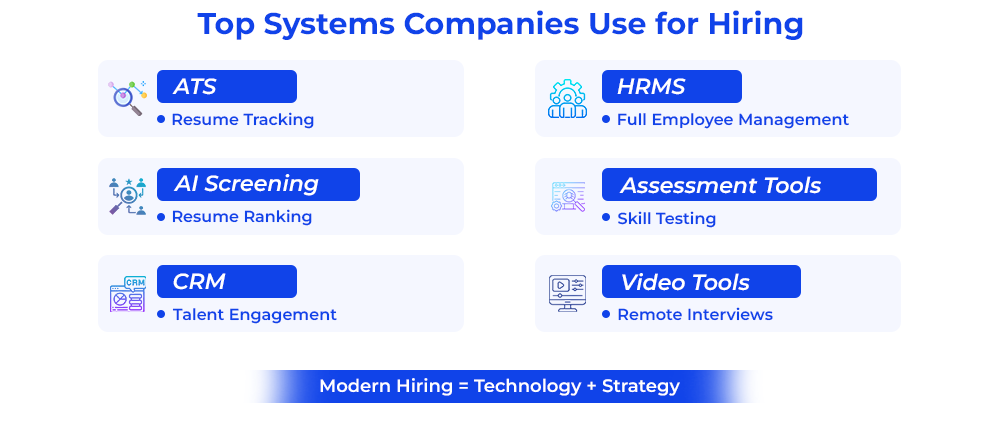
- AI-based Recruitment: The AI-based recruitment process employs artificial intelligence to automate all recruitment functions, resulting in better operational efficiency. AI algorithms can process thousands of resumes within minutes to find candidates who possess the required qualifications for specific job openings. Candidates use chatbots to make their first inquiries while the chatbots handle interview scheduling and provide application status updates. The AI-driven video interview system evaluates candidate answers through facial recognition and voice analysis to determine their job suitability. The predictive algorithms use historical hiring data and performance patterns to determine which candidates will achieve success in their particular job positions.
- Applicant Tracking Systems (ATS) serve as software tools that oversee the complete hiring procedure. The systems enable automatic processing of resumes through their parsing system, which creates searchable databases while they conduct application screenings based on job requirements, monitor candidates throughout the hiring process, and support interview scheduling and let hiring teams work together on evaluations and produce recruitment reports. The ATS platforms have become essential recruitment tools that help organizations need to hire large numbers of employees to achieve efficient recruitment processes. B.Tech Computer Science and M.Tech Computer Science graduates create AI-based recruitment platforms through their work on building all algorithms, interfaces, and integration systems which drive modern hiring solutions.
- Data-Driven Recruitment provides organizations with the ability to use analytical data to improve their hiring process and better inform hiring decisions. Organizations do not rely predominantly on their intuition to make hiring decisions anymore; instead, organizations track the following metrics in the hiring process: time-to-hire (number of days from when a job is posted until the candidate accepts), cost-per-hire (total costs incurred for recruitment divided by the number of candidates hired), quality-of-hire (ratings of employee performance, plus retention rates of new hires), source effectiveness (recruiting channels that yield the best potential candidates), and candidate experience scores. Organizations can use these data points to identify trends, outdated practices, bottlenecks, and continually improve their hiring processes.
- Predictive Hiring uses predictive models that rely on historical data and statistical models that have been developed to predict the relative success of candidates. Organizations have the ability to identify the characteristics of their previous employees that have been shown to be predictors of successful performance and longevity within the organization by analyzing trends of their previously hired employees through predictive models. For example, through the use of predictive modeling, organizations may identify that employees who have obtained specific degrees, worked for specific companies, possess certain skill sets, and/or scored within specific ranges on assessments will likely achieve a higher level of success than other candidates. This method of selecting candidates enables organizations to make objective, evidence-based hiring decisions.
- Remote Hiring and Virtual Interviews to their current status as the main method of recruitment. Organizations use video interviewing platforms to evaluate candidates from any location worldwide without needing to spend money on travel. Virtual assessment centers execute online group exercises, presentation sessions, and simulation activities. Digital onboarding programs welcome and integrate new employees remotely. The talent pool expansion occurs because organizations need to fill roles in multiple locations, while applicants can apply for jobs from their current locations.
- Integration of Analytics and Technology: The Online MBA program in HR Analytics teaches students to analyze hiring data and make better workforce choices. The programs show students how to construct recruitment dashboards, which will display crucial performance indicators together with their results. The programs teach students how to build recruitment dashboards that display essential metrics together with their results. The statistical analysis process helps researchers discover candidate selection trends. The programs help learners create predictive models that forecast candidate success rates through data analysis. The programs help learners calculate recruitment return on investment through data analysis. The programs teach students how to use data storytelling techniques to present their findings to executives. The recruitment process now requires HR staff members to possess advanced analytical skills because organizations use technology-based systems that depend on data for their operations. HR professionals need strong analytical capabilities to leverage these tools effectively and translate data into strategic talent decisions.
Role of Data Analytics in Recruitment
Data analytics has changed the way recruitment works because it used to rely heavily on instincts and personal opinions. Companies now use data at every part of the hiring process. With analytics, we can now see which job boards give us the best talent, which questions will give us better predictions for job performance, which interviewers are making the best hiring decisions, and what characteristics of candidates lead to success in their jobs and staying in those jobs. The evidence-based hiring process will reduce bias at every step of the process and improve the quality of hiring while providing business leaders with evidence of the value of recruitment strategically.
Resume screening can now be done through automation with natural language processing (NLP) and machine learning at a much larger scale than previous methods. The automation process allows us to extract important details from the candidate's resume, determine if the candidate meets the requirements of the job posting, rank the candidates based on how well they fit into the organization, and also flag resumes that need to be manually reviewed by a recruiter. Automating the resume screening process saves recruiters a significant amount of time during the initial screening, allowing recruiters to spend more time communicating with potential candidates and making detailed evaluations of candidates that require the judgment of a human.
The method of predictive performance analysis utilizes past data to determine how future employees will perform their work duties. Organizations develop success prediction models through their study of employee work patterns. The models use educational credentials, work history, professional development, assessment results, and interview outcomes as input data. Predictive analytics enables organizations to select candidates who will excel in their jobs, which enhances their recruiting process and decreases employee attrition rate.
The elimination of hiring bias through analytics stands as one of the most significant advantages analytics provides to organizations. Data reveals hiring biases which occur when recruiters discard qualified candidates from certain demographic groups at higher rates and when assessors give better evaluations to specific candidate types and when interview questions create disadvantages for particular backgrounds.
Analytics allows organizations to implement bias reduction methods which include blind resume screening that eliminates all candidate identification details and structured interviews that use identical questions and scoring criteria and diverse interview panels. Organizations establish equitable and inclusive hiring methods by tracking and assessing bias throughout their hiring processes.
HR software that provides analytical capabilities relies on the work of professionals with a B.Tech in Computer Science. These professionals build the algorithms that filter resumes, the databases where candidates are stored, the maintenance dashboards that show HR recruitment metrics, the HR systems integration points that connect different HR systems, and the security technologies that protect candidates from protected information. The relationship between technical expertise and HR knowledge provides powerful recruitment technology.
Online MBA students in HR analytics will become proficient in understanding hiring metrics and predictive modeling; therefore, they will know how to identify business hiring needs and design experiments to test recruitment approaches; interpret statistical data and communicate their findings; combine quantitative and qualitative data with human judgment; and use data and algorithms ethically. As a result, they will become capable of using technology while maintaining the human aspects required to recruit effectively.
Specialized Recruitment for Different Business Functions
Different organizational functions require distinct recruitment approaches tailored to their specific talent needs and market dynamics.
HR and Finance Integration:
Recruiting for finance functions involves finding candidates with specialized technical knowledge, regulatory understanding, and analytical capabilities. Organizations hire financial analysts who interpret business performance data, compliance managers who ensure regulatory adherence, treasury specialists who manage organizational liquidity and investments, and controllers who oversee accounting operations. Finance recruitment often emphasizes professional certifications like CA, CPA, or CFA alongside relevant experience.
An Online MBA in HRM and Finance proves particularly valuable for understanding workforce budgeting and compensation planning. These dual-specialization programs teach how to develop salary structures aligned with market rates and organizational budgets, forecast workforce costs and headcount requirements, analyze compensation ROI and cost-per-employee metrics, design incentive programs that drive desired behaviors, and ensure compliance with wage regulations and tax implications. HR professionals with finance knowledge bridge the gap between people strategy and financial reality, ensuring talent decisions make business sense.
HR and Marketing Integration:
Marketing recruitment focuses on creative talent, strategic thinkers, and data-savvy professionals who can build brand awareness and drive customer engagement. Organizations hire brand managers who develop and protect brand identity, digital marketers who manage online presence and campaigns, content creators who produce engaging materials, and marketing analysts who measure campaign effectiveness and customer behavior.
An Online MBA in Marketing and HR Management supports employer branding and talent attraction strategies. This specialization combination teaches how to position the organization as an employer of choice, create compelling employee value propositions that resonate with target candidates, leverage marketing channels and techniques for recruitment, build career sites and content that attract quality applicants, and measure employer brand strength and recruitment marketing ROI. As competition for talent intensifies, organizations increasingly apply marketing principles to recruitment, treating candidates as customers and using brand-building techniques to win talent wars.
Challenges in Modern Recruitment
Despite technological advances and sophisticated methods, recruitment faces significant challenges that complicate talent acquisition efforts.
- Skill gaps represent one of the most pressing issues. The rapid pace of technological change creates demand for capabilities that educational systems haven't produced in sufficient quantity. Organizations struggle to find candidates with emerging skills like artificial intelligence, machine learning, cybersecurity, data science, and cloud architecture. Even when candidates possess relevant degrees, they often lack practical experience with the latest tools and technologies. This mismatch between available talent and organizational needs forces companies to invest heavily in training or compete aggressively for the limited pool of skilled professionals.
- High competition for quality talent has intensified as organizations recognize that people drive competitive advantage. The best candidates often receive multiple offers, giving them negotiating power around compensation, flexibility, and career opportunities. Employers must differentiate themselves not just through salary but through culture, growth opportunities, work-life balance, and purpose. Competition is particularly fierce for specialized technical roles and leadership positions.
- Talent shortage in technology poses particular challenges. The digital transformation of virtually every industry has created enormous demand for software developers, data scientists, cybersecurity professionals, and technical architects. Supply cannot keep pace with demand, leading to significant salary inflation, aggressive poaching, and organizations hiring candidates who don't fully meet requirements. This shortage affects not just technology companies but every organization pursuing digital initiatives.
- Retention issues complicate recruitment by creating a continuous need to replace departing employees. When organizations cannot retain talent effectively, they face perpetual recruitment demands that strain HR resources and budgets. High turnover also damages employer brand, as departing employees share their experiences through word-of-mouth and online reviews. Effective recruitment must be paired with strong onboarding and retention strategies to ensure hiring efforts translate into sustained organizational capability.
- Bias and compliance risks create legal and ethical challenges. Unconscious bias can lead to discrimination in hiring decisions, exposing organizations to legal liability and preventing them from accessing the full talent pool. Regulations around equal employment opportunity, data privacy, background checks, and hiring documentation create compliance requirements that organizations must navigate carefully. Failure to maintain fair, legally compliant recruitment processes can result in lawsuits, regulatory penalties, and reputational damage.
These challenges underscore the need for analytical HR professionals who can diagnose recruitment problems through data, design evidence-based solutions, leverage technology to extend reach and reduce bias, and continuously adapt strategies to changing talent markets. Upskilling through Online MBA programs provides HR professionals with the strategic thinking, analytical capabilities, and business acumen needed to navigate these complex challenges effectively.
Future of Recruitment in India
The recruitment environment continues to change quickly due to technological advancements, employee expectations, and economic changes.
- AI (artificial intelligence) will become more advanced in recruitment, moving from solely screening resumes to using AI for initial video interviews, assessing candidates through personality analysis to evaluate cultural fit, predicting candidates’ chance of success with higher degrees of accuracy, and ensuring personalised candidate experiences on a larger scale. As AI technology progresses, assessing candidates using AI as opposed to traditional human methods will become increasingly indistinct, whereby AI will perform more complex assessments, while humans will focus on building relationships with candidates and making final assessment decisions.
- Automation in recruitment will reduce the amount of administrative tasks HR professionals spend time on, allowing them to devote their time and energy to other strategic functions. Automated processes for scheduling interviews, communicating with candidates, conducting background checks, developing offer letters, and gathering onboarding forms will enable faster and more efficient methods to hire and subsequently provide a greater overall experience for candidates, in addition to reducing time and money to hire candidates.
- Hybrid Work emergence: proliferation of hybrid workforces (i.e., employees that work in the office, remotely or hybrid) will drastically alter recruitment strategies for employers. Recruiters will be able to recruit talent for positions without regard to the candidates' locations; therefore, expanding their candidate pool geographically, while at the same time, lenders will find they are competing for candidates from all over the world. Employers’ recruitment processes will need to evaluate candidates' ability to work successfully in remote workspaces, manage their productivity, and collaborate with their peers.
- Gig economy: The expansion of the gig economy will transform how organizations conduct their hiring procedures. Organizations will increasingly hire for projects rather than permanent positions which will lead them to hire freelancers and consultants and contract workers for their specific initiatives. Organizations need to adopt new recruitment methods which enable them to find specialized experts while they build flexible worker databases and provide positive experiences to non-permanent employees who may work with them again in upcoming projects.
- Data-driven talent management will connect recruitment processes with workforce analytics by linking hiring decisions to performance management, learning and development processes, and succession planning and retention strategies. Organizations will track employees throughout their entire lifecycle using data to understand which recruitment sources produce the most successful long-term employees, which candidate characteristics predict high performance and advancement, and how hiring decisions impact organizational capability over time.
Organizations need HR Analytics specialists because their business requirements have grown according to their new demands. Organizations require professionals who can manage recruitment technology while conducting complex workforce data analysis and predicting future talent needs through business planning procedures, and enhancing their recruitment processes through continuous evaluation. The upcoming workforce will include HR professionals who possess interpersonal skills, together with technical abilities that allow them to comprehend both human behavior and data analytics. Technology will advance its partnership with human resources because both departments will work together to build intelligent recruitment systems that enable efficient hiring processes and fair hiring methods that drive organizational success.
Conclusion
Modern recruitment uses various methods, which include traditional methods and advanced technological solutions, to create a complete recruitment system. Internal recruitment methods like promotions, transfers, and employee referrals leverage existing organizational talent and provide career growth opportunities. Organizations also use campus visits, job portals, social media, and specialized agencies for external recruitment to discover new talent who possess different skills. Digital and analytical methods, which include AI-based screening, applicant tracking systems, and predictive hiring, have turned recruitment into a data-driven field of study.
An understanding of strategic HR is critical to navigate today's complex business climate. To successfully recruit talent, one must know one’s business strategy in order to anticipate future talent requirements; understand talent market dynamics and use those better to identify talent sources; know what technologies and methods are best to use to recruit talent based on the vacancies to be filled; use analytics to measure and optimize recruiting effectiveness; and finally, deliver a positive candidate experience by strengthening and promoting the employer brand.






![What to Do After B.Des? [Career Options After B.Des]](https://cdn.collegevidya.com/blog/Career_Options_After_Bachelor_Of_Design.webp)

![6-Month Courses [Certificate & Diploma Programs Online 2026]](https://cdn.collegevidya.com/blog/6-month-certificate-programs-for-it-working-professionals.webp)