


Below is a detailed breakdown of what makes a PhD hard, who is eligible, how long it takes, and what career opportunities open up afterward.
|
Doctor of Philosophy | |
|
Duration |
3-7 years |
|
Eligibility |
|
|
Challenges |
|
|
Career scope |
|
What is a PhD degree?
A PhD (Doctor of Philosophy) is the highest academic qualification granted in a particular discipline with an emphasis on original, in-depth research in that area. This is different from other degrees such as Bachelor's and Master's, which mostly involve learning pre-existing knowledge about a particular discipline. The PhD degree entails identifying a research gap, investigating the same in isolation, and presenting findings that have not been presented anywhere else previously.
The PhD program in India generally begins with coursework and ends after a number of years with the submission and defense of a thesis. It is done by students who want to join the academic field, become an advanced researcher, or pursue any other particular profession where in-depth knowledge of a subject is highly valued.
What Is the Eligibility for a PhD in India?
To pursue a PhD in India, candidates generally need the following:
- A Master's degree in a relevant subject with a minimum of 55% marks (relaxation applies for reserved categories)
- Clearance of NET, SET, or a university-specific entrance exam (required by most institutions)
- Now, individuals with a four-year bachelor’s degree in a relevant subject can apply for the PhD.
- In many cases, a research proposal submission and interview are required before admission
Working professionals now have an additional advantage: several universities offer online PhD programs such as Online Doctorate of Business Administration and part-time PhD programs, allowing candidates to pursue a doctorate without pausing their careers.
How Long Does a PhD Take in India?
A PhD degree course in India usually lasts between 3 and 6 years, based on the university, field of research, and progress of the research being undertaken. The average time for full-time PhD courses is at least 3 years, while most scholars take between 4 and 5 years to complete the program. A part-time PhD course could last for more than 6 years.
The time period may vary depending on several other issues like the requirement of coursework, the data collection process, research complexities, publication requirements, and completion and defense of the thesis.
Why Is a PhD So Difficult? The Biggest Challenges Every Doctoral Student Faces
1) Research Design and Methodology Difficulties
One of the frequent PhD problems arises at the research design stage when the process of creating an effective methodological framework demands sophisticated analysis and profound knowledge of academic literature.
Among other research problems, there are:
- Finding the research gap
- Picking suitable research methodologies
- Creating reliable methods for collecting data
- Analyzing complex research results
- Relating theory to empirical research
They are especially prevalent among the initial stages of doctoral education. Good mentorship and supervision greatly enhance the efficiency of research. Research on the effectiveness of supervision and the problem of high PhD dropout rates confirms that proper mentoring is crucial for students to finish their studies.
Many PhD candidates have difficulties with the choice of the research methodology. To learn more about how to choose the research approach, see our article on the topic.
2) Difficulties with Academic Supervision
Supervision is an essential aspect of the process of doing a PhD. But then again, most research scholars usually experience problems with supervision at some point in time.
Examples of problems include:
- Low availability of academic supervisors
- Slow responses concerning feedback on dissertation writing
- Contradictory instructions from different supervisors
- Unclear instructions on the research that one should conduct
Problems like these could affect the progress of the research process and also increase the level of stress. Selection of the right mentor at the beginning of the PhD is very vital. It is therefore essential to know how to select the right academic supervisor.
3) Managing PhD Stress and Mental Health
PhD studies may turn out to be stressful emotionally, and there are many students who experience stress, self-doubt, and burnout throughout the entire period of the degree.
The sources of stress are:
- Lengthy periods of research work
- Need for publications
- Concerns regarding funding
- Lack of social interaction
- Academic pressures
It is crucial to learn how to manage PhD stress successfully in order to ensure well-being and have a balanced PhD experience. Overwhelmed students should seek advice from academic tutors, discuss research issues with their supervisors, and contact professional mentors.
4) Financial and Funding Challenges
Funding concerns constitute one of the most important challenges that doctoral students face. While numerous PhD programs offer stipends or scholarships, these sources of finance might not be enough to meet all the requirements.
The common financial challenges consist of:
- Research funding limitations
- Travel expenses to conferences
- Publishing costs
- Expensive cost of living
Having access to the appropriate funding and other sources of help becomes essential for successful completion of the studies.
Moreover, when searching for possible academic support tools, the students should look at the Academic Supervision services page where various research assistance options for postgraduate students are discussed.
5) Isolation and Lack of Academic Community
For many PhD programs, there is a need for prolonged periods of self-study where students spend weeks or months working with data, reviewing literature, and writing their thesis without interacting much with others.
- The feeling of being alone is one of the major complaints in a PhD program.
- Networking with other people who share similar research interests can be very motivating and productive in terms of doing your PhD research.
- Taking part in academic conferences, workshops, and seminars will help you build such networks.
6) Time Management and Productivity Issues
Time management is one of the critical elements of successful PhD completion. As the PhD entails prolonged and complicated work, there are certain difficulties that the majority of students find hard to cope with.
The typical problems related to time management are:
- Procrastination
- Ability to prioritize research activities
- Excessive time devoted to literature review
- Delayed thesis writing
A proper research schedule, realistic goals for each week, and continuous tracking of progress can help students to organize their efforts and move forward.
7) Writing and Publishing Academic Research
The composition of the PhD thesis is one of the hardest processes in a doctorate program. It is hard for many people to communicate their research results effectively and in a well-organized way.
These are some of the challenges faced by writers:
- Writer’s block
- Chapter structuring difficulties
- Inclusion of comments from the supervisor
- Maintaining standards of academic writing
Acquiring academic writing skills from the early stages of doing the doctorate helps to make the process of writing the thesis easier.
A lot of PhD students have found it beneficial to have research mentoring or academic mentoring while writing their thesis or journal papers.
8) Imposter Syndrome in Doctoral Studies
Imposter syndrome is a common phenomenon among doctoral candidates, who question their abilities and feel like they do not have the competency of their fellow students even if they excel in all areas.
Imposter syndrome usually has the following effects:
- Self-doubt
- Fear of presenting the research
- Shying away from intellectual discussion
- Lack of confidence in one’s research abilities
Being aware that imposter syndrome is a common phase that every doctoral student passes through helps to build confidence and be more resilient.
9) Balancing Personal Life with Doctoral Commitments
Balancing the work-life equilibrium in a PhD program can be tough. Academic responsibilities such as research, thesis completion, and publication may involve considerable effort, thus causing problems for a student in balancing personal and professional life.
Failure to maintain a balance might result in an increased chance of burnout due to constant stress at academic institutions.
Setting proper boundaries, taking care of one’s health, being socially active, and engaging in non-academic activities can assist a student in handling stress better and remaining productive.
What Is the Career Scope After a PhD?
A common misconception is that a PhD only leads to teaching or academic research. In reality, career paths are far broader:
- Academia: Professor, Assistant Professor, Associate Professor, Research Guide, Postdoctoral Researcher, Academic Administrator
- Corporate R&D: Senior roles in pharmaceuticals, biotechnology, technology, manufacturing, consulting, artificial intelligence, and product innovation
- Government Research Institutes: Research positions in organizations like ICMR, CSIR, DRDO, ISRO, ICAR, and DST-funded institutions
- Policy and Think Tanks: Research Analyst, Policy Advisor, Public Policy Consultant, and roles in national and international think tanks
- Entrepreneurship: Launch research-based startups, commercialize innovations, provide specialized consulting services, or develop technology-driven solutions
- Data Science & AI: Roles such as Data Scientist, Machine Learning Engineer, AI Researcher, and Quantitative Analyst
- Scientific Writing & Publishing: Medical Writer, Technical Writer, Scientific Editor, Journal Reviewer, and Science Communicator
- Intellectual Property (IP): Patent Analyst, Technology Transfer Officer, IP Consultant, and Innovation Manager
- International Organizations & NGOs: Research and advisory roles in organizations focused on healthcare, education, sustainability, climate change, and global development
- Consulting & Leadership: Technology Consultant, Management Consultant, Innovation Strategist, R&D Manager, and Subject Matter Expert (SME)
- Independent Consulting: Offer expert advisory services, conduct specialized research projects, and provide training or workshops in your area of expertise.
PhD holders are also frequently preferred for leadership and strategic roles, since their analytical and problem-solving abilities are already well-established through years of independent research.
Is a PhD Worth It?
A PhD is a significant investment of time and effort, but it isn't impossible. With the right university, a clear research direction, and consistent planning, the journey becomes far more manageable—particularly for those pursuing teaching, research, or specialized industry expertise.
Pursue your doctoral degree through flexibility
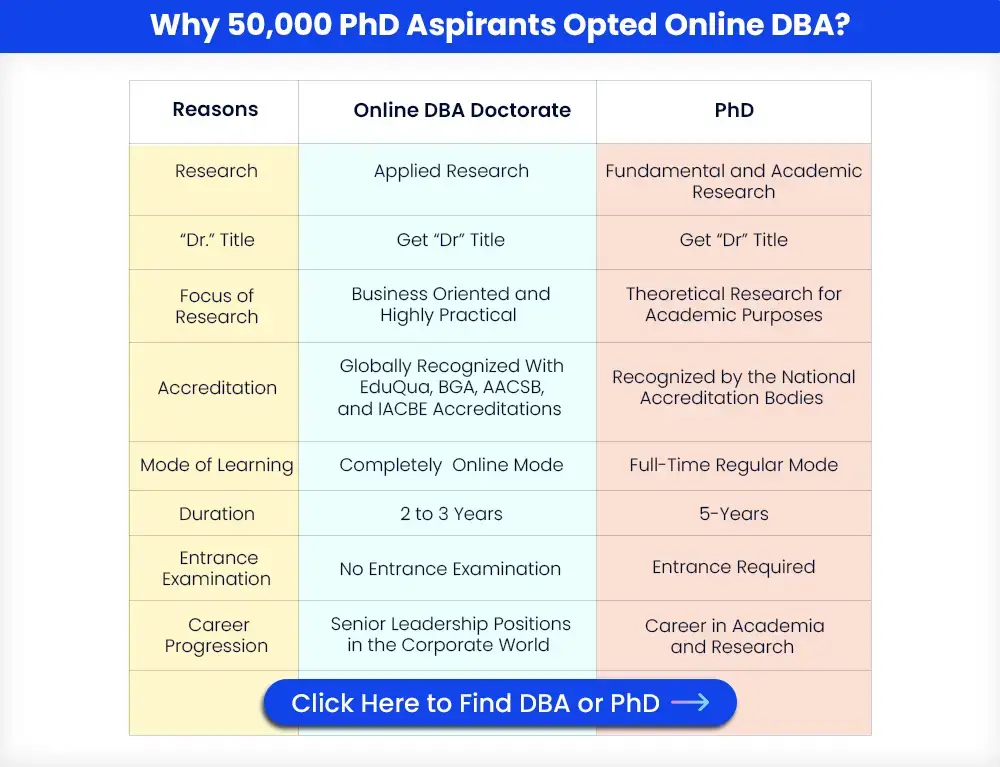
Traditional PhD programs require a lot of time commitment, which is about 3 to 7 years. You can pursue your doctoral degree in three years with more flexibility through the Online Doctorate of Business Administration (DBA). An online DBA program is ideal for working professionals who wish to pursue a doctoral degree while working.
Features of an Online DBA and how it is different from a regular PhD:
- An online DBA program is a three-year program, with flexible class schedules.
- On completing the program, the individuals will also earn the ‘Dr’ title from the respective university.
- The individuals will meet their subject matter experts online, where they will learn more about their subject.
- Individuals will submit their research at the end of the program.
- The DBA program focuses on practical application and management. To solve business- related problems.
- DBA is for those who want to pursue a career in advanced management roles. Upon completing the program, the degree holders will get wider exposure to the job market and may even get senior roles in top organizations.
- Eligibility Criteria:
- Individuals having a bachelor's degree with 5 years of experience.
- Candidates having a master's degree or equivalent degree.
- Individuals must have a certain amount of work experience to get admission.
Career opportunities after an online DBA program
These are what you can pursue after the Online DBA program:
|
Career |
Typical Role |
|
Executive Leadership |
CEO, COO, Managing Director |
|
Senior Management |
General Manager, Operations Director, Strategy Director |
|
Management Consulting |
Business Consultant, Strategy Consultant, Organizational Consultant |
|
Higher Education |
Professor (depending on local regulations), Lecturer, Academic Administrator |
|
Corporate Training |
Leadership Coach, Executive Trainer, Learning & Development Director |
|
Research & Analytics |
Business Researcher, Market Research Director, Policy Analyst |
|
Entrepreneurship |
Founder, Startup Advisor, Business Owner |
|
Government & Public Sector |
Policy Advisor, Public Administration Executive |
|
Nonprofit Organizations |
Executive Director, Program Director |