



Quick Overview: The highest-paying PhD fellowship in India is the Prime Minister’s Research Fellowship (PMRF), at ₹70,000 to ₹80,000 a month plus a ₹2 lakh annual research grant. The most common is the UGC or CSIR NET JRF, which pays ₹37,000 a month for two years and ₹42,000 as Senior Research Fellow (SRF) for up to five years (as of October 2026).
PhD fellowships in India 2026 range from ₹17,600 a month (ICHR JRF) to ₹80,000 a month (PMRF). A PhD in India takes a minimum of 3 years and up to 6 years under UGC’s 2022 regulations, so a fellowship is often the only way scholars can afford to research full-time. Nearly every scheme in this list requires full-time PhD registration. Most also pay House Rent Allowance (HRA) and an annual contingency grant on top of the monthly amount.
This guide compares every major fellowship for PhD students in India, covering government, category-based, private, and international schemes. NET-JRF is the best-known route, but it is not the only one. GATE, institute admission, and a research proposal can also lead to a fellowship. For each scheme, you’ll find the amount, eligibility, selection route, 2026 application window, and official link, so you can shortlist the ones that fit your stream before you apply.

Quick Highlights
- Highest government PhD fellowship: PMRF, ₹70,000 to ₹80,000 a month + ₹2 lakh research grant a year.
- Highest overall amount: PM Fellowship for Doctoral Research, which pays double the JRF/SRF rate, half from ANRF and half from an industry partner.
- Most common route: UGC NET JRF or joint CSIR-UGC NET JRF, ₹37,000 a month, rising to ₹42,000 as SRF.
- JRF age limit: 30 years for UGC NET JRF, with up to 5 years' relaxation for reserved categories, PwD, third gender, and women.
- For social sciences: ICSSR Doctoral Fellowship, ₹20,000 a month + ₹20,000 a year contingency for 2 years.
- Without NET: PMRF, DST INSPIRE, CSIR JRF-GATE, institute fellowships, ICSSR, ICHR, JNMF and NCERT (Non-NET) do not require NET-JRF.
PhD Fellowships in India 2026 at a Glance
The table below compares the most popular PhD fellowships in India by monthly amount and duration. Amounts are the base monthly fellowship; most government fellowships also pay HRA and an annual contingency grant.
|
Fellowship |
Granted by |
Monthly amount |
Duration |
|
PMRF |
Ministry of Education |
₹70,000 to ₹80,000 + ₹2 lakh/yr grant |
4 to 5 years |
|
PM Fellowship for Doctoral Research |
ANRF + industry partner |
Double JRF/SRF rate |
4 years |
|
UGC NET JRF |
UGC |
₹37,000 (JRF), ₹42,000 (SRF) |
Up to 5 years |
|
CSIR NET JRF / JRF-GATE |
CSIR |
₹37,000 (JRF), ₹42,000 (SRF) |
Up to 5 years |
|
DST INSPIRE Fellowship |
Dept. of Science & Technology |
₹37,000 (JRF level), then SRF |
Up to 5 years |
|
ICMR JRF |
ICMR / DHR |
₹37,000 (JRF), ₹42,000 (SRF) |
Up to 5 years |
|
DBT JRF |
Dept. of Biotechnology |
₹37,000 (JRF), ₹42,000 (SRF) |
Up to 5 years |
|
NFSC / NFOBC |
Ministry of Social Justice |
₹37,000 (JRF), ₹42,000 (SRF) |
Up to 5 years |
|
Savitribai Jyotirao Phule (Single Girl Child) |
UGC |
₹37,000 (JRF), ₹42,000 (SRF) |
Up to 5 years |
|
NCERT Doctoral Fellowship |
NCERT |
₹23,000 (Non-NET), ₹25,000 (NET) |
3 years |
|
ICSSR Doctoral Fellowship |
ICSSR |
₹20,000 + ₹20,000/yr contingency |
2 years |
|
JNMF Scholarship |
Jawaharlal Nehru Memorial Fund |
₹18,000 (incl. tuition) |
2 years |
|
ICHR JRF |
ICHR |
₹17,600 + ₹16,500/yr contingency |
2 years |
|
Google PhD Fellowship (India) |
|
Up to US$50,000 in total |
Up to 4 years |
|
Fulbright-Nehru Doctoral |
USIEF |
Monthly stipend + airfare + insurance |
6 to 9 months (USA) |
Which is the highest-paid PhD Fellowship in India?
The Prime Minister's Research Fellowship (PMRF) is the highest paid fully government-funded PhD fellowship in India, at ₹70,000 a month in years 1 and 2, ₹75,000 in year 3, and ₹80,000 in years 4 and 5, plus ₹2 lakh a year for research and travel. The PM Fellowship for Doctoral Research can pay more in total because it pays double the JRF/SRF rate, but half of it must come from an industry partner, and only up to 100 fellowships are awarded a year.
- PM Fellowship for Doctoral Research: double the JRF/SRF rate (government + industry)
- PMRF: ₹70,000 to ₹80,000 a month + ₹2 lakh a year
- UGC, CSIR, ICMR, DBT, DST INSPIRE, NFSC, NFOBC: ₹37,000 (JRF) to ₹42,000 (SRF) a month + HRA
- NCERT: ₹23,000 to ₹25,000 a month
- ICSSR: ₹20,000 a month
- JNMF: ₹18,000 a month
- ICHR: ₹17,600 a month
What is a PhD Fellowship?
A PhD fellowship is a monthly payment made to a full-time doctoral scholar so they can focus on research instead of a job. It usually comes with a contingency grant (for books, fieldwork, conferences) and House Rent Allowance (HRA) if the scholar does not live in a hostel.
A fellowship is tied to research and paid monthly for several years. A scholarship usually covers fees or a fixed amount. A stipend is the common word for the monthly fellowship amount. In India, most PhD fellowships follow the government JRF/SRF pay structure. Also explore: PhD for Working Professionals
|
Working Professionals Also Looking For | |
Duration of PhD in India
Under the UGC (Minimum Standards and Procedures for Award of PhD Degree) Regulations, 2022, a PhD takes a minimum of 3 years and a maximum of 6 years, with extensions allowed under the regulations. Women and persons with disabilities get up to 2 additional years. Since most fellowships run for 2 to 5 years, the fellowship rarely covers the entire PhD, which is why scholars often combine an exam-based fellowship with an institute fellowship or project position.
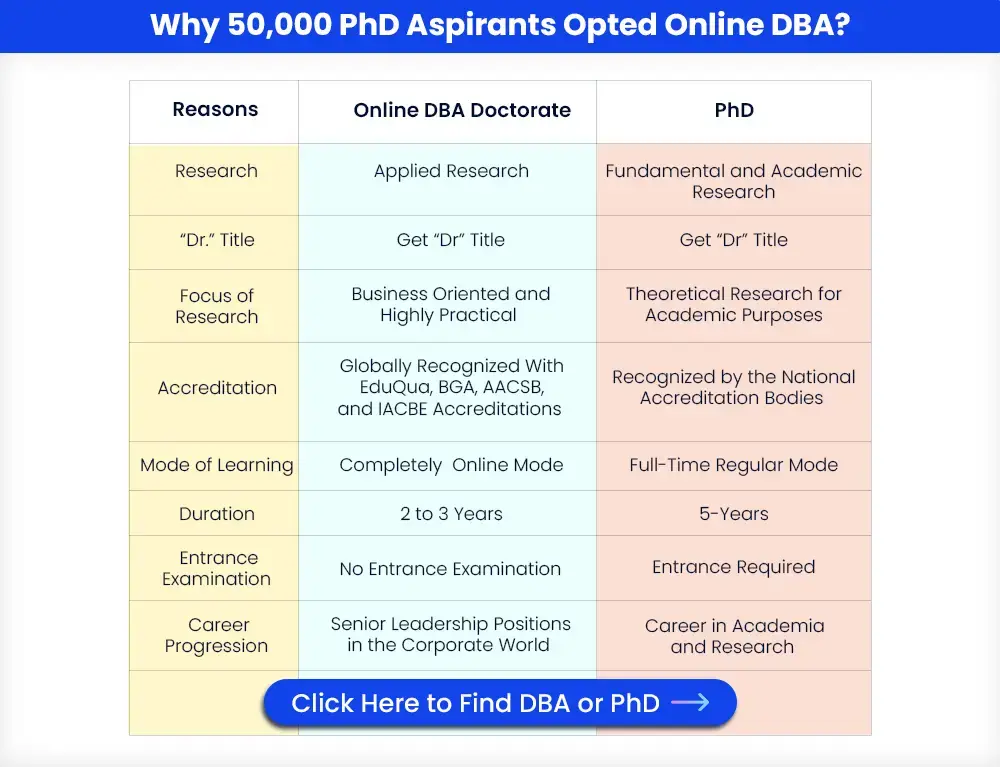
Almost all fellowships listed here require a full-time PhD. Working professionals who cannot study full-time can look at an Online DBA, which is a professional doctorate and is offered in fully online mode by top-tier foreign universities. The Duration of this online doctorate is 2 to 3 years.
Prime Minister's Research Fellowship (PMRF)
The Prime Minister's Research Fellowship pays ₹70,000 to ₹80,000 a month plus a ₹2 lakh annual research grant to PhD scholars at IITs, IISc, IISERs and select central universities and NITs. It was announced in the Union Budget 2018-19 and is run by the Ministry of Education.
|
Particulars |
Details |
|
Granted by |
Ministry of Education, Government of India |
|
Fellowship amount |
₹70,000/month (years 1 and 2), ₹75,000 (year 3), ₹80,000 (years 4 and 5) |
|
Research grant |
₹2 lakh a year for 5 years (academic contingency, national and foreign travel) |
|
Duration |
4 years for students from integrated courses, 5 years for B.Tech students |
|
Eligibility |
Direct entry: UG or integrated degree in science/technology from IISc, IITs, NITs, IISERs, IIEST or centrally funded IIITs, plus PhD admission at a PMRF-granting institute. Lateral entry: scholars already pursuing a PhD at a granting institute within 12 or 24 months of admission. |
|
Selection |
Institute recommendation, followed by review and selection committee |
|
Attempts |
A candidate can apply twice if eligible each time |
|
Official website |
Prime Minister Fellowship for Doctoral Research
The Prime Minister Fellowship for Doctoral Research pays double the prevailing JRF/SRF amount to full-time PhD scholars working on industry-relevant research, with 50% paid by the Anusandhan National Research Foundation (ANRF) and 50% by a partner company. ANRF has taken over the role earlier played by SERB. The scheme is implemented with industry bodies such as CII and, in the 2026 call, FICCI.
|
Particulars |
Details |
|
Granted by |
Anusandhan National Research Foundation (ANRF, formerly SERB) + industry partner |
|
Fellowship amount |
Double the JRF/SRF rate (with HRA), revised as JRF/SRF norms change. 2026 listings put it at up to about ₹12.49 lakh a year in total. |
|
Funding split |
50% ANRF, 50% industry partner |
|
Duration |
4 years |
|
Eligibility |
Indian national, full-time PhD at a recognised Indian university, institute or lab; must apply within 14 months of PhD registration or admission; must have an industry partner as co-applicant |
|
Research areas |
Science, technology, engineering, agriculture and medicine with industry application |
|
Number of fellowships |
Up to 100 a year |
|
Official website |
PMRF vs Prime Minister Fellowship for Doctoral Research
|
Point |
PMRF |
PM Fellowship for Doctoral Research |
|
Run by |
Ministry of Education |
ANRF + industry (via CII / FICCI) |
|
Amount |
₹70,000 to ₹80,000/month + ₹2 lakh/yr |
Double JRF/SRF rate, half from industry |
|
Where you study |
IITs, IISc, IISERs, select central universities/NITs |
Any recognised Indian university or lab |
|
Key condition |
Admission at a PMRF-granting institute |
Industry partner; apply within 14 months of PhD registration |
|
Duration |
4 to 5 years |
4 years |
Working Professionals Also Looking for
|
Working Professionals Also Looking for | |
| - | |
UGC NET JRF Fellowship
The UGC NET Junior Research Fellowship pays ₹37,000 a month for the first two years and ₹42,000 a month as SRF for the remaining period, up to five years or thesis submission, whichever is earlier. It is awarded to candidates who qualify UGC NET in the JRF category and register for a PhD in Sciences, Humanities or Social Sciences (including languages) at a recognised university.
The National Testing Agency (NTA) conducts UGC NET twice a year, in the June and December cycles. Since 2024, NET results come in three categories: JRF + Assistant Professor, Assistant Professor + PhD admission, and PhD admission only. Only the first category carries the fellowship.
|
Particulars |
Details |
|
Granted by |
University Grants Commission (UGC) |
|
Fellowship amount |
₹37,000/month (JRF, 2 years), ₹42,000/month (SRF, remaining tenure) + HRA |
|
Contingency |
Humanities & Social Sciences: ₹10,000/yr (JRF), ₹20,500/yr (SRF). Sciences: ₹12,000/yr (JRF), ₹25,000/yr (SRF) |
|
Duration |
Up to 5 years or thesis submission, whichever is earlier |
|
Upgrade to SRF |
After 2 years, subject to a satisfactory progress assessment |
|
Age limit (JRF) |
30 years as on 1 December 2026; up to 5 years' relaxation for OBC-NCL, SC, ST, PwD, third gender and women |
|
Award letter validity |
3 years from the date of issue |
|
Official website |
If you are preparing for NET, read our guide on whether you can pursue a PhD without UGC NET.

CSIR NET JRF Fellowship
The CSIR NET JRF fellowship pays ₹37,000 a month for the first two years and ₹42,000 a month afterwards to PhD scholars in Chemical, Earth, Life, Mathematical and Physical Sciences. CSIR also awards JRF-GATE to GATE-qualified engineering and science graduates at the same rates.
These rates have been in effect since 1 January 2023.
|
Particulars |
Details |
|
Granted by |
Council of Scientific and Industrial Research (CSIR) |
|
Fellowship amount |
₹37,000/month (first 2 years), ₹42,000/month (after 2 years) + HRA |
|
Routes |
Joint CSIR-UGC NET (JRF) or JRF-GATE |
|
Duration |
Up to 5 years |
|
Eligibility |
Master's degree (or final year) in a relevant science subject; integrated BS-MS and BS-4 year graduates also eligible as per bulletin |
|
Age limit |
Upper age limit applies for JRF with relaxations; check the current CSIR NET information bulletin |
|
Exam |
Conducted by NTA twice a year (June and December cycles) |
|
Official website |
DST INSPIRE Fellowship
The DST INSPIRE Fellowship pays a JRF-level stipend of ₹37,000 a month, later upgraded to SRF, plus HRA and contingency, to around 1,000 PhD scholars a year in basic and applied sciences, including engineering and medicine. It is the doctoral component of the INSPIRE scheme of the Department of Science and Technology.
|
Particulars |
Details |
|
Granted by |
Department of Science and Technology (DST) |
|
Fellowship amount |
₹37,000/month at JRF level, upgraded to SRF rates + HRA + annual contingency |
|
Duration |
Up to 5 years or completion of PhD, whichever is earlier |
|
Number of fellowships |
About 1,000 a year |
|
Eligibility |
Aimed at university first-rank holders at UG or PG level in science, and INSPIRE scholars who meet the PG marks requirement |
|
Age |
22 to 27 years |
|
Note |
If you already hold another fellowship, you must switch to INSPIRE on accepting it |
|
2025-26 window |
24 April to 23 May 2026 at online-inspire.gov.in |
ICMR JRF and DBT JRF Fellowships
ICMR JRF and DBT JRF both pay ₹37,000 a month as JRF and ₹42,000 as SRF, for up to five years, to PhD scholars in biomedical sciences and biotechnology, respectively.
|
Particulars |
ICMR JRF |
DBT JRF |
|
Granted by |
Indian Council of Medical Research / Dept. of Health Research |
Department of Biotechnology |
|
Amount |
₹37,000 (JRF), ₹42,000 (SRF) + contingency + HRA |
₹37,000 (JRF), ₹42,000 (SRF) + contingency + HRA |
|
Selection exam |
DHR-BRET (ICMR JRF exam); 2026 exam held 10 January 2026 |
Biotechnology Eligibility Test (BET); 2026 exam held 17 May 2026 |
|
Fields |
Biomedical sciences, microbiology, biochemistry, public health |
Biotechnology and life sciences |
|
Duration |
Up to 5 years or thesis submission |
Up to 5 years |
|
Official website |
Institute Fellowships at IITs, NITs, IISc and IISERs
Most PhD scholars at IITs, NITs, IISc and IISERs are funded by an institute fellowship (often called HTRA) of ₹37,000 a month for the first two years and ₹42,000 afterwards, plus HRA, if they have qualified GATE or NET. This is the most common way engineering and science PhD students in India are paid, and the fellowship comes with admission rather than a separate application.
The AICTE Doctoral Fellowship (ADF) works on similar lines for full-time PhD scholars at AICTE-approved institutions and pays at the same JRF/SRF rates.
|
Popular PhD Specializations in India! | |
Jawaharlal Nehru Memorial Fund Scholarship
The Jawaharlal Nehru Memorial Fund (JNMF) Scholarship pays ₹18,000 a month (including tuition) plus a ₹15,000 annual contingency for two years to full-time PhD scholars in five subject areas. For the 2026 cycle, JNMF announced 18 scholarships for Indian nationals and 2 for nationals of other Asian countries.
Eligibility Criteria
- At least 60% aggregate marks at both graduate and postgraduate level.
- Already registered or admitted for a full-time PhD at a recognised Indian university or institution.
- Below 35 years of age as on 1 October of the selection year, with up to 5 years' relaxation for SC, ST, OBC-NCL, PwD, women and some other categories.
- Research in one of: Indian History & Civilisation, Sociology, Comparative Studies in Religion & Culture, Economics, or Ecology & Environment.
Application Process
Candidates submit the application form with a research synopsis (up to 1,500 words), supervisor's report, and a ₹100 postal order or demand draft (SC/ST candidates are exempt). Shortlisted candidates are interviewed at Teen Murti House, New Delhi.
|
Particulars |
Details |
|
Granted by |
Jawaharlal Nehru Memorial Fund |
|
Fellowship amount |
₹18,000/month including tuition fee |
|
Contingency |
₹15,000 a year |
|
Duration |
2 years |
|
Research fields |
Indian History & Civilisation, Sociology, Comparative Religion & Culture, Economics, Ecology & Environment |
|
Selection |
Shortlisting + interview (no exam) |
|
Official website |
NCERT Doctoral Fellowship for PhD
The NCERT Doctoral Fellowship pays ₹23,000 a month to Non-NET candidates and ₹25,000 a month to NET-qualified candidates, plus ₹10,000 a year contingency, for up to three years of doctoral research in education and related disciplines.
Eligibility for NCERT Doctoral Fellowship for PhD:
- Master's degree in education or a related discipline, with marks as specified in the current NCERT notification.
- Registered (or registering) as a full-time PhD scholar in a recognised institution, with a supervisor approved by NCERT.
- Willingness to contribute 30 days a year to NCERT's teaching, field research or curriculum work.
|
Particulars |
Details |
|
Granted by |
National Council of Educational Research and Training (NCERT) |
|
Fellowship for Non-NET candidates |
₹23,000/month |
|
Fellowship for NET-qualified candidates |
₹25,000/month |
|
Contingency |
₹10,000 a year |
|
Duration |
3 years or thesis submission, whichever is earlier |
|
Research field |
Education and related disciplines |
|
Selection |
Application + interview |
|
Official website |
ICSSR Doctoral Research Fellowship
The ICSSR Doctoral Fellowship pays ₹20,000 a month plus a ₹20,000 annual contingency grant for two years to full-time PhD scholars in the social sciences. The Indian Council of Social Science Research, an autonomous body under the Ministry of Education, awards it.
Eligibility for ICSSR Doctoral Research Fellowship
- Full-time, bona fide PhD scholar registered in a social science or related discipline at a recognised university or institute.
- 5% relaxation in marks for SC, ST, OBC-NCL and PwD candidates.
- Not eligible if you have already received a major fellowship such as UGC JRF, RGNF, MANF, CSIR, ICAR, ICPR, ICMR, ICHR or JNMF. Scholars drawing the UGC Non-NET fellowship can apply.
|
Particulars |
Details |
|
Granted by |
Indian Council of Social Science Research (ICSSR), Ministry of Education |
|
Fellowship amount |
₹20,000/month |
|
Contingency grant |
₹20,000 a year |
|
Duration |
2 years (Full-Term); 6 months (Short-Term Doctoral Fellowship) |
|
Research field |
Social and human sciences (sociology, economics, political science, public policy and related) |
|
Selection |
Research proposal evaluation and merit list |
|
2026-27 cycle |
Applications 15 June to 4 August 2026 (extended) |
|
Official website |
ICHR Junior Research Fellowships (JRF)
The ICHR Junior Research Fellowship pays ₹17,600 a month plus a ₹16,500 annual contingency grant for two years to PhD scholars in historical studies. ICHR invited applications for 80 fellowships in its latest call.
Eligibility
- Registered for a PhD in historical studies (Ancient, Medieval or Modern India) at a recognised university.
- No upper age limit; research registration is mandatory.
- Whole-time research engagement; cannot be combined with any other job.
|
Particulars |
Details |
|
Granted by |
Indian Council of Historical Research (ICHR) |
|
Fellowship amount |
₹17,600/month |
|
Contingency |
₹16,500 a year |
|
Duration |
2 years, extendable by 1 year without financial support |
|
Research field |
Historical studies |
|
Selection |
Research proposal + interview |
|
Latest cycle |
Applications 20 March to 10 April 2026 (80 fellowships) |
|
Official website |
ESSO-NCESS Junior Research Fellowship
The National Centre for Earth Science Studies (NCESS), Thiruvananthapuram, under the Ministry of Earth Sciences, takes PhD scholars in earth system sciences. Its July 2026 JRF advertisement offered ₹37,000 a month. Candidates who already hold a CSIR, UGC or DST INSPIRE fellowship can also do their PhD research at NCESS while drawing that fellowship.
|
Particulars |
Details |
|
Granted by |
ESSO-National Centre for Earth Science Studies, Ministry of Earth Sciences |
|
Fellowship amount |
₹37,000/month (2026 advertisement) + HRA as per rules |
|
Duration |
Initially 3 years, extendable by 1 year based on performance review |
|
Eligibility |
M.Sc / M.Tech / M.E. in a relevant subject with NET or GATE as specified in the advertisement |
|
Age limit |
Up to 28 years (relaxation as per government rules) |
|
Research areas |
Crustal, coastal and atmospheric processes; natural resources and environmental management |
|
Official website |
PhD Fellowships for SC, OBC and Single Girl Child Candidates
Three central fellowships pay the full JRF/SRF rate of ₹37,000 and ₹42,000 a month to specific groups. There is no separate exam for the two category fellowships; selection comes from the NET-JRF merit list prepared by NTA.
|
Fellowship |
Who it is for |
Amount |
How you are selected |
|
National Fellowship for Scheduled Caste Students (NFSC) |
SC candidates; 2,000 slots a year |
₹37,000 (JRF), ₹42,000 (SRF) + HRA + contingency |
NET-JRF merit list; award letter via NSFDC portal |
|
National Fellowship for OBC Students (NFOBC) |
OBC candidates |
₹37,000 (JRF), ₹42,000 (SRF) + HRA |
NET-JRF merit list; published by NBCFDC |
|
Savitribai Jyotirao Phule Fellowship for Single Girl Child |
Single girl child pursuing PhD |
₹37,000 (JRF), ₹42,000 (SRF) |
UGC scheme guidelines |
The Maulana Azad National Fellowship (MANF) for minority students was discontinued from 2022-23. In February 2026, the government told Parliament that NFSC's income criteria and financial aspects are under revision, so check the latest guidelines before applying.
Google PhD Fellowship India Program
The Google PhD Fellowship in India gives early-stage PhD students up to US$50,000 over as many as four years to cover stipend, research and travel, along with a Google Research mentor. It is for computer science and related fields.
Eligibility
- Full-time PhD in computer science or a related field at a recognised Indian university, for the full fellowship period.
- Students cannot apply directly; the university nominates candidates.
- Research should align with Google's research areas and AI Principles. Past awardees and Google employees are not eligible.
|
Particulars |
Details |
|
Granted by |
Google Research |
|
Fellowship amount |
Up to US$50,000 in total (early-stage PhD students) |
|
Duration |
Up to 4 years |
|
Research field |
Computer science and related fields (machine learning, NLP, systems, algorithms and more) |
|
Application |
University nomination |
|
2026 cycle |
Opened March 2026; deadline 30 April 2026; recipients announced by 31 October 2026 |
|
Official website |
Fulbright-Nehru Doctoral Research Fellowship
The Fulbright-Nehru Doctoral Research Fellowship funds Indian PhD scholars to spend 6 to 9 months doing research at a US university. It is administered by the United States-India Educational Foundation (USIEF) and is for pre-doctoral research, meaning you must still be pursuing your PhD.
Eligibility for Fulbright-Nehru Doctoral Research Fellowship
- Indian citizen registered for a PhD at an Indian institution.
- Expected thesis submission date at least three months after the fellowship ends.
- Employees of the Government of India and state governments are not eligible.
- You can apply for only one Fulbright-Nehru category in a cycle, and must undertake to return to India after the fellowship.
|
Particulars |
Details |
|
Granted by |
United States-India Educational Foundation (USIEF) |
|
Benefits |
J-1 visa support, monthly stipend, accident and sickness coverage, round-trip economy airfare, affiliation fees |
|
Duration |
6 to 9 months in the USA |
|
Research field |
Multiple disciplines; priority areas announced each cycle |
|
2027-28 cycle |
Deadline 1 July 2026; programme begins August/September 2027 |
|
Official website |
Can You Get a PhD Fellowship Without NET?
Yes. Several PhD fellowships in India do not require NET-JRF:
- GATE route: CSIR JRF-GATE and institute fellowships at IITs, NITs, IISc and IISERs.
- Institute route: PMRF (through admission at a PMRF-granting institute).
- Merit route: DST INSPIRE Fellowship for top rankers.
- Proposal route: ICSSR, ICHR, JNMF and NCERT (Non-NET rate), selected on research proposal and interview.
- Industry or private route: PM Fellowship for Doctoral Research, Google PhD Fellowship, Fulbright-Nehru.
- University route: many central and state universities pay a Non-NET or university fellowship to full-time scholars without JRF.
How to Choose the Right PhD Fellowship
|
Your stream |
Fellowships to target |
|
Science (physics, chemistry, maths, earth sciences) |
CSIR NET JRF, DST INSPIRE, PMRF, institute fellowship, ESSO-NCESS |
|
Engineering and technology |
Institute fellowship via GATE, PMRF, CSIR JRF-GATE, PM Fellowship for Doctoral Research |
|
Life sciences and medicine |
ICMR JRF, DBT JRF, CSIR NET JRF (Life Sciences), DST INSPIRE |
|
Computer science |
Institute fellowship, PMRF, Google PhD Fellowship |
|
Social sciences |
UGC NET JRF, ICSSR, JNMF (Economics, Sociology) |
|
Humanities, languages, history |
UGC NET JRF, ICHR JRF, JNMF (History, Religion & Culture) |
|
Education |
NCERT Doctoral Fellowship, UGC NET JRF |
|
Research abroad during PhD |
Fulbright-Nehru Doctoral Research Fellowship |
Conclusion
For most PhD students in India, the fellowship comes through NET-JRF or an institute fellowship, both paying ₹37,000, rising to ₹42,000 a month. Science and engineering scholars at top institutes should aim for PMRF or DST INSPIRE. Social science and humanities scholars should combine UGC NET JRF with ICSSR, ICHR, or JNMF applications. Since amounts and dates change every cycle, always confirm the latest notification on the official website before you apply.
|
Related Trending Articles | |
|
PhD Admission In Govt Universities [Last Dates, Fees, Eligibility, Entrance] | |