



Quick Overview: The PhD stipend in India is ₹37,000 a month as JRF for the first two years and ₹42,000 a month as SRF from year three, under UGC, CSIR, DST, DBT, ICMR and IIT fellowships. These rates have been in force since 1 January 2023. The highest is the Prime Minister’s Research Fellowship at ₹70,000 to ₹80,000 a month. The lowest is the Non-NET fellowship at ₹8,000 a month. HRA and an annual contingency grant are paid on top of most fellowships.
A PhD in India usually takes three to six years, and for most scholars the monthly stipend decides whether that commitment is possible at all. Yet the amount you receive is not fixed by your degree. It depends on the exam you clear, the category you qualify in, and the institution you join. At the same central university, a first-year scholar on the Non-NET fellowship receives ₹8,000 a month, while a first-year JRF receives ₹37,000.
The current JRF and SRF rates took effect on 1 January 2023, after scholars across the country pushed for a hike, and no newer revision has been notified since. The Non-NET fellowship, meanwhile, has stayed at ₹8,000 a month for over a decade. At the other end, PMRF and a few institutes such as IIIT-Delhi now pay well above the national rate.
This guide brings every major PhD fellowship in India into one place for 2026: how much each pays, who is eligible, how HRA and contingency work, what the stipend adds up to over a full PhD, and how to apply.

Key Highlights
- UGC, CSIR, DST-INSPIRE, DBT, ICMR, NFSC and NFOBC fellowships all pay the same base rate: ₹37,000 (JRF) and ₹42,000 (SRF) a month.
- IITs pay institute-funded PhD scholars ₹37,000 a month for two years and ₹42,000 from year three, in return for about 8 hours a week of teaching or research assistance.
- PMRF is the highest government fellowship: ₹70,000 to ₹80,000 a month plus a ₹2 lakh yearly research grant.
- The Non-NET fellowship remains ₹8,000 a month and hasn't been revised in over a decade.
- Clearing NET alone is not enough. Only Category-1 (JRF) qualifiers get the JRF stipend, and only after they join a full-time PhD. Students Also Enrolled | PhD for Working Professionals!
- Over a full five-year PhD, a JRF/SRF scholar receives about ₹24 lakh in base stipend, against about ₹45 lakh for a PMRF fellow and about ₹3.84 lakh for a four-year Non-NET scholar.
Also Read | What Is a Doctoral Degree?
What is the PhD stipend?
A PhD stipend is a monthly fellowship paid to full-time research scholars so they can work on their thesis without taking a job. In India, it is not a salary. It comes from a funding body (UGC, CSIR, DST, DBT, ICMR, a ministry, or the institute itself); it is tied to research progress, and it usually stops when you submit your thesis or complete five years, whichever comes first.
Most Indian fellowships follow a two-stage structure. You start as a Junior Research Fellow (JRF) for two years. After a review of your research progress, you are upgraded to Senior Research Fellow (SRF) for up to three more years at a higher rate.
Who is eligible for a PhD stipend in India?
A stipend is not automatic with PhD admission. You get one only through one of these routes:
- A national fellowship exam: UGC-NET (JRF category), CSIR-UGC NET, DBT-BET, ICMR-JRF, or a similar test, followed by admission to a full-time PhD.
- Institute funding: IITs, NITs, IISc, IISERs and some private universities fund admitted full-time scholars through GATE, JEST or their own selection.
- A merit fellowship: PMRF, DST-INSPIRE or ICSSR, each with its own eligibility and selection.
- A category fellowship: NFSC for SC candidates and NFOBC for OBC (non-creamy layer) candidates, awarded through the NET-JRF merit list.
- A project position: a JRF or SRF post on a funded research project, where you can usually register for a PhD alongside.
- Non-NET fellowship: full-time scholars at central universities who receive no other funding.
Almost every fellowship requires full-time enrolment. Part-time PhD scholars and those in salaried jobs are generally not eligible.
PhD Stipend in India at a Glance
|
Fellowship |
Who funds it |
Years 1–2 (per month) |
Year 3 onward (per month) |
Extra support |
|
UGC-NET JRF |
UGC |
₹37,000 |
₹42,000 |
HRA + contingency |
|
CSIR-NET JRF |
CSIR |
₹37,000 |
₹42,000 |
HRA + ₹20,000/yr contingency |
|
DST-INSPIRE Fellowship |
DST |
₹37,000 |
₹42,000 |
HRA + contingency |
|
DBT-JRF (BET) |
DBT |
₹37,000 |
₹42,000 |
HRA + ₹30,000/yr contingency |
|
ICMR-JRF |
ICMR |
₹37,000 |
₹42,000 |
HRA + ₹20,000/yr contingency |
|
NFSC / NFOBC |
Ministry of Social Justice |
₹37,000 |
₹42,000 |
HRA + contingency |
|
IIT institute fellowship (TA/HTRA) |
Ministry of Education via IIT |
₹37,000 |
₹42,000 |
HRA if no hostel |
|
PMRF |
Ministry of Education |
₹70,000 |
₹75,000 (yr 3), ₹80,000 (yrs 4–5) |
₹2 lakh/yr research grant |
|
ICSSR Full-Term Doctoral |
ICSSR |
₹20,000 |
— (2-year award) |
₹20,000/yr contingency |
|
UGC Non-NET |
UGC via central universities |
₹8,000 |
₹8,000 |
₹8,000–₹10,000/yr contingency, no HRA |
How to Apply for a PhD Stipend in India
For UGC-NET or CSIR-NET JRF, the process looks like this:
- Register for the exam on the NTA portal. UGC-NET is held twice a year, in the June and December cycles.
- Qualify in the JRF category (Category 1) and download your e-certificate and JRF award letter from the NTA portal.
- Secure PhD admission at a UGC-recognized university, IIT, or research institute within the three-year validity of the award letter.
- Submit joining documents to the university: award letter, admission proof, joining report signed by your supervisor, and bank details.
- Get the fellowship activated. The university registers you with the funding body, and the stipend is paid to your Aadhaar-seeded bank account through Direct Benefit Transfer (DBT).
- Apply for the SRF upgrade at the end of your second year, after your progress assessment.
For institute fellowships, apply through the institute’s PhD admission cycle with your GATE or entrance score. For PMRF, first get selected into a PhD at a granting institution, which then nominates you on pmrf.in. The government’s fellowships.gov.in portal also has a fellowship calculator you can use to estimate your total amount.

Revised JRF Stipend: UGC-NET and CSIR-NET
The UGC approved the current rates in its 572nd meeting on 20 September 2023, effective from 1 January 2023. CSIR and DST adopted the same rates in 2023.
|
Component |
JRF (Years 1–2) |
SRF (Years 3–5) |
|
Monthly fellowship |
₹37,000 (was ₹31,000) |
₹42,000 (was ₹35,000) |
|
Yearly fellowship |
₹4,44,000 |
₹5,04,000 |
|
UGC contingency, Humanities and Social Sciences |
₹10,000 per year |
₹20,500 per year |
|
UGC contingency, Sciences and Engineering |
₹12,000 per year |
₹25,000 per year |
|
CSIR / ICMR contingency |
₹20,000 per year |
₹20,000 per year |
|
HRA |
Per central government norms, if no hostel |
Same |
How the JRF-to-SRF upgrade works
- Complete two years as JRF.
- Submit a progress report and appear before an assessment committee at your university.
- On a satisfactory review, you are upgraded to SRF at ₹42,000 a month. An unsatisfactory review can extend your JRF period.
How much is HRA on a PhD stipend?
HRA is paid as a percentage of your fellowship, based on the city class of your institution, and only if the institute does not provide you with hostel accommodation. Under central government norms, the rate falls between 8% and 30% depending on the city and the latest revision applied. At 30%, a JRF in a metro city would receive ₹11,100 in HRA, taking the monthly total to ₹48,100. At 8%, the HRA would be ₹2,960. Check your university’s current HRA notification for the exact figure.
Students Also Ask | PhD Distance Education!
PhD Stipend for NET-Qualified Students: JRF vs NET-Only
This is where many aspirants get confused. UGC-NET now has three result categories, and only one of them carries a stipend:
|
UGC-NET category |
What it qualifies you for |
Stipend? |
|
Category 1 |
JRF + Assistant Professor + PhD admission |
Yes, ₹37,000 then ₹42,000 |
|
Category 2 |
Assistant Professor + PhD admission |
No national fellowship |
|
Category 3 |
PhD admission only |
No national fellowship |
If you qualify in Categories 2 or 3, you can still get funding through an institute fellowship, a project position, or, at a central university, the Non-NET fellowship.
JRF award letter validity
The JRF award letter issued by NTA is valid for three years from its date of issue. You must join a full-time PhD at a UGC-recognised institution within that window, or the fellowship lapses. If you were already enrolled in a PhD when you qualified, the fellowship starts from the date of the NET result or your date of joining, whichever is later. Know the Fact | PhD Online India!
PhD Stipend without JRF (Non-NET Fellowship)
Full-time PhD scholars at central universities who receive no other funding can get the UGC Non-NET fellowship of ₹8,000 a month, with a contingency grant of about ₹8,000 a year for Humanities and Social Sciences and ₹10,000 for Sciences. No HRA is paid. This rate has not been revised in over a decade.
That makes the Non-NET fellowship worth about one-fifth of a JRF. The Ministry of Education acknowledged the dependence of many scholars on this ₹8,000 amount in a Rajya Sabha reply in December 2024, but as of October 2026, no revision has been announced. Research scholar associations, including AIRSA, continue to demand an increase.
State universities and private universities set their own rules. Some offer a university fellowship to non-NET scholars, while many offer none.
- The Non-NET fellowship (₹8,000 per month) has not been revised since 2006, and UGC is still reviewing requests from research associations to increase this amount.
- The All-India Research Scholars Association (AIRSA) and other student groups continue to press for an urgent revision, citing rising living costs. As of 2026, the government has not announced any hike for Non-NET scholars.
- On the positive side, prestigious fellowships like PMRF (₹70,000–₹80,000 per month) remain in place, giving top researchers significantly higher support.
|
Working Professionals Also Looking For | |
In November 2022, the UGC discontinued the MPhil program following NEP 2020 recommendations and asked universities to stop MPhil admissions in December 2023. Under the new PhD criteria, students with a four-year undergraduate degree and at least 75% marks can apply for PhD programs.
The National Testing Agency (NTA) conducts the NET twice a year to select assistant professors and JRF candidates. JRF offers Rs 37,000 per month. In the last UGC-NET held in December 2023, 9,45,872 candidates registered, 6,95,928 appeared, and 58,794 qualified, with only 5,032 shortlisted for both assistant professor and JRF. For the CSIR UGC-NET exam in December 2023, 6,988 qualified, and 1,932 secured JRF.
PhD Stipend at IIT, IISc, IISER and NIT
Institutes funded by the Ministry of Education pay their own fellowship to admitted full-time PhD scholars who do not bring an external fellowship. At IITs, it is called a Teaching Assistantship (TA) or Half-Time Research Assistantship (HTRA).
|
Institute |
Years 1–2 |
Year 3 onward |
Notes |
|
IITs (TA / HTRA) |
₹37,000 |
₹42,000 |
About 8 hours a week of teaching or lab support; HRA only if no hostel |
|
IISc, IISERs, NITs |
₹37,000 |
₹42,000 |
Aligned to national JRF/SRF rates; check each prospectus |
|
IIIT-Delhi |
₹60,000 |
₹60,000 |
Raised from ₹37,000 in March 2025; includes HRA, plus ₹20,000/yr contingency |
|
BITS Pilani (institute fellowship) |
₹37,000 |
Up to ₹42,000 |
Enhancement after two years and research proposal approval |
Scholars who hold an external fellowship such as UGC or CSIR JRF are paid under that scheme instead, at the same base rate. PMRF fellows at these institutes get the higher PMRF rate.
PhD stipend through GATE
GATE does not pay a stipend by itself. It is an entry route: a valid GATE score gets you considered for PhD admission with institute funding at IITs, NITs, IISc, and other centrally funded institutions. Once admitted on institute support, you receive the institute fellowship above, currently ₹37,000 rising to ₹42,000.
Highest PhD Stipend in India: Prime Minister’s Research Fellowship (PMRF)
PMRF, launched in the Union Budget 2018-19, pays nearly double the JRF rate and adds a research grant.
|
PhD year |
Monthly fellowship |
Yearly fellowship |
|
Year 1 |
₹70,000 |
₹8,40,000 |
|
Year 2 |
₹70,000 |
₹8,40,000 |
|
Year 3 |
₹75,000 |
₹9,00,000 |
|
Year 4 |
₹80,000 |
₹9,60,000 |
|
Year 5 |
₹80,000 |
₹9,60,000 |
|
Research grant |
— |
₹2,00,000 per year |
Who can apply: you must be selected into a regular PhD at a PMRF-granting institution (IISc, IITs, IISERs, NITs, IIEST and centrally funded IIITs). There are two channels:
- Direct entry, in your first semester: generally a CGPA of 8.0 or above from a granting-type institution, or CGPA 8.0 with a GATE score of 650 or a qualifying JRF rank from another university, or GATE plus an M.Tech/MS at a granting institution. Scholars who upgraded from M.Tech or MS to PhD cannot use this channel.
- Lateral entry, for scholars already in a PhD at a granting institution, based on coursework performance within a fixed period from joining. You can apply this way at most twice.
PMRF guidelines were updated in January and July 2026, so check the exact CGPA, GATE, and time-window rules on pmrf.in before you apply.
Other PhD Fellowships in India
|
Fellowship |
For whom |
Amount |
|
DST-INSPIRE Fellowship |
Top-ranked science postgraduates and INSPIRE scholars |
At par with JRF/SRF: ₹37,000 → ₹42,000 + HRA + contingency |
|
DBT-JRF |
Biotechnology postgraduates who clear BET Category I |
₹37,000 → ₹42,000 + HRA + ₹30,000/yr contingency |
|
ICMR-JRF |
Biomedical and life science postgraduates |
₹37,000 → ₹42,000 + HRA + ₹20,000/yr contingency |
|
NFSC |
SC candidates, via NET-JRF merit list |
₹37,000 → ₹42,000 + HRA + contingency |
|
NFOBC |
OBC (non-creamy layer) candidates, via NET-JRF merit list |
₹37,000 → ₹42,000 + HRA + contingency |
|
ICSSR Full-Term Doctoral Fellowship |
Social science PhD scholars |
₹20,000/month for 2 years + ₹20,000/yr contingency |
|
DST WISE-PhD |
Women scientists pursuing PhD |
₹37,000/month (revised from ₹31,000) |
Each fellowship has its own exam calendar and quota. NFSC offers 2,000 new fellowships a year and NFOBC 1,000, both awarded from the NET-JRF results.
Research Associate Stipend After a PhD
Once you complete your PhD, project and postdoctoral roles are paid as Research Associates. The 2023 revision set these rates:
|
Level |
UGC / Ministry of Education |
DST |
|
Research Associate I |
₹58,000 |
₹58,000 |
|
Research Associate II |
₹61,000 |
₹61,000 |
|
Research Associate III |
₹67,000 |
₹63,000 |
What a PhD Stipend Is Actually Worth Over Five Years
Monthly figures hide how large the gap between fellowships really is. Here is the total base stipend across a full PhD, before HRA and contingency:
|
Route |
How it adds up |
Total base stipend |
|
PMRF |
₹70,000 × 24 + ₹75,000 × 12 + ₹80,000 × 24 months |
₹45 lakh (+ ₹10 lakh research grant) |
|
IIIT-Delhi institute fellowship |
₹60,000 × 60 months (HRA included) |
₹36 lakh |
|
JRF / SRF (UGC, CSIR, IIT, DST, DBT, ICMR) |
₹37,000 × 24 + ₹42,000 × 36 months |
₹24 lakh |
|
ICSSR Full-Term Doctoral |
₹20,000 × 24 months |
₹4.8 lakh |
|
UGC Non-NET (central university) |
₹8,000 × 48 months |
₹3.84 lakh |
Two takeaways for aspirants. First, clearing JRF is worth more than six times the Non-NET route over a PhD, so an extra NET attempt before you enrol can pay off. Second, PMRF nearly doubles the JRF total, so science and engineering aspirants with a strong CGPA should target PMRF granting institutions from the start.
Are PhD Stipends Paid on Time?
Not always. Delays of a few months are a common complaint among scholars, usually caused by late document submission, fund release cycles, or mismatches between university and bank records. Some agencies release fellowship money to the institution in yearly or half-yearly instalments, which can also slow individual payments. To avoid delays, submit your joining report, bank details, and progress reports on time, and keep your Aadhaar and bank account linked.
Is a PhD Stipend Taxable?
A fellowship given to support your education is generally treated as exempt from income tax under Section 10(16) of the Income Tax Act, which covers scholarships granted to meet the cost of education. A salary from a teaching or project job is taxable. If you hold a project position or receive mixed income, confirm your case with a tax professional.
Can Working Professionals Get a PhD Stipend?
In most cases, no. Government fellowships require full-time enrolment and do not allow a parallel salaried job. If you plan to keep working, you will usually be self-funded or sponsored by your employer. Part-time PhD programmes at many universities allow this, but they do not carry a JRF-type stipend. Working professionals should plan their doctoral budget around fees rather than a fellowship.
What are the salaries for different professions?
Various PhD specializations and their respective salaries are listed in the table below:
|
Streams |
PhD Specialisations |
Average Salary |
|
Arts |
|
Rs 4,00,000 – Rs 12.00,000 |
|
Law |
|
Rs 2,00,000 – Rs 13,00,000 |
|
Engineering |
|
Rs 3,00,000 – Rs 15,00,000 |
|
Medical |
|
Rs 4,00,000 – Rs 11,00,000 |
|
Management |
|
Rs 4,00,000 – Rs 12.00,000 |
|
Science |
|
Rs 4,00,000 – Rs 14,00,000 |
|
Mathematics |
PhD Mathematics |
Rs 3,00,000 – Rs 10,00,000 |
What is the monthly salary of a PhD Graduate?
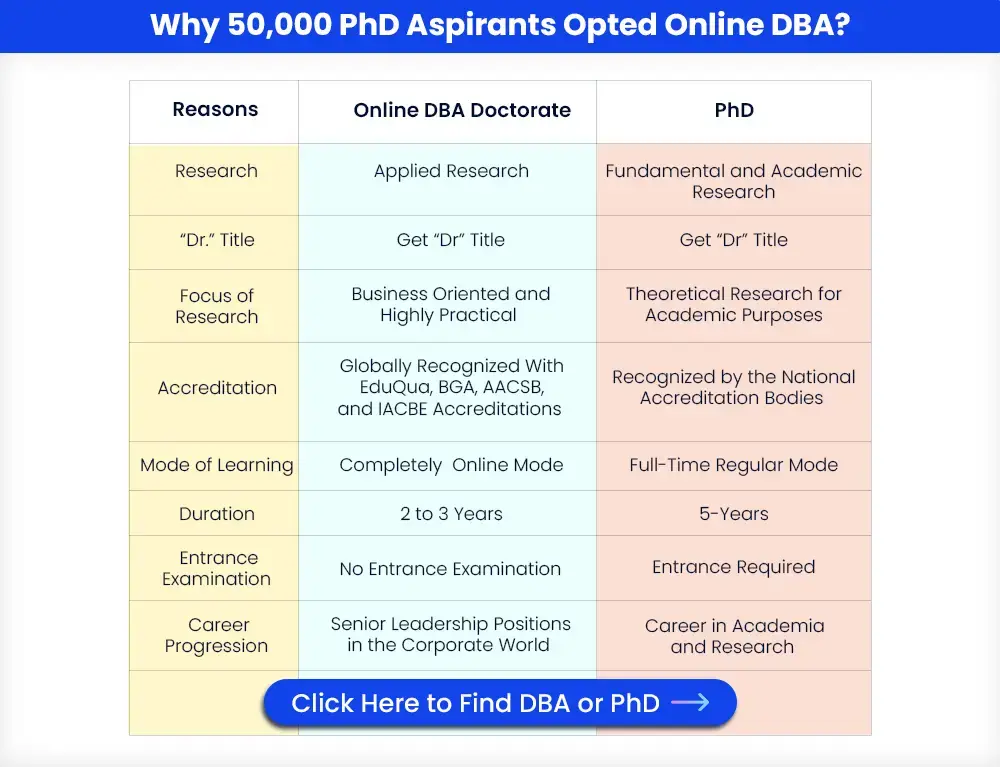
High-paying PhD posts have salary ranges of INR 12 to 26 LPA. Their monthly salary ranges from INR 90K to INR 92.5K. A research degree opens up a lot of options, and more employment prospects motivate students to pursue PhDs in their areas of interest. Also, you have the option to choose the DBA program as an alternative to the PhD program if you wish to continue earning while pursuing your studies without quitting your current position.
It is a doctoral program that grants you the title "Dr." It also stands for Doctor of Business Administration. If you choose an online DBA program, you may also obtain your doctorate from an international university without having to relocate there. Online DBAs are a great substitute for online PhDs, which are not accepted in India. Online Doctorate courses are accepted everywhere, including India.
You may obtain an online DBA from several colleges. A few of them are listed below:
|
Universities |
Fees |
|
INR 8,14,000 | |
|
INR 8,12,500 | |
|
INR 8,14,000 |
Below is information on PhD salaries in India for Professors, Associate Professors, and other positions. You can view the table to see what PhD Professors make in India.

|
Job Profile |
Average Annual Salary |
|
Associate Professor |
Rs 4 to 8 Lakhs |
|
Professor |
Rs 7.80 to 30 Lakhs |
|
Research Assistant |
Rs 3.10 to 5 Lakhs |
|
Computer Engineer |
Rs 4 to 9 Lakhs |
|
Legal Assistant |
Rs 4 to 8 Lakhs |
|
Consultant |
Rs 8 to 10 Lakhs |
|
Research Scientist |
Rs 6 to 12 Lakhs |
|
Senior Writer |
Rs 10 to 14 Lakhs |
Stipend in the USA for PhD Students
The United States has some of the world’s best universities, making it a top destination for international researchers. A Master’s degree is not always required to do a PhD in the US. Some top universities offer direct-entry PhD programs.
An American PhD starts with two to three years of coursework to pass qualifying exams. During this time, doctoral students develop their research interests and choose their thesis topic. They must write a thesis proposal, which needs approval before starting their dissertation. Most programs require PhD students to gain two to three years of teaching experience, either by leading a class or as teaching assistants.
|
Popular PhD Specializations in India! | |
| - | |
It takes about six years to earn a PhD in the US. Unlike some European countries, there is no minimum salary or national salary scale for PhD students in the US. PhD students earn between $15,000 (Rs 12,52,195)and $30,000 (Rs 25,04,391) a year, depending on their institution, field of study, and location. This stipend can be tax-free if it is a fellowship award, or taxable if it is a salary from a teaching position.
American PhD students are usually paid for only nine months of the year, but many programs offer summer funding opportunities. A PhD funding package often includes a full or partial tuition waiver.
Stipend in the UK for PhD Students
PhD stipends usually range from £15,000 (Rs 16,02,925) to £18,000 (Rs 19,23,492). In the UK, PhD students who work as teaching assistants can earn around £10 (Rs 1,068)per hour for marking tutorials, £15 (Rs 1,602) per hour for leading lab sessions, and up to £20 (Rs 2,136) per hour for teaching undergrad classes. The actual amount you earn will depend on your department's pay rates and how many hours you can commit to. If you're part of a Graduate Teaching Assistantship (GTA) program, you'll have set weekly hours. If not, you'll need to consistently dedicate several hours per week.
Research assistantships in the UK pay between £25,000 (Rs 26,71,357) to £30,000 (Rs 32,05,850)per year, with STEM fields generally offering higher salaries than non-STEM fields.
Stipend in Canada for PhD Students?
If you are interested in pursuing a PhD in Canada, it is a great place for PhD studies, with lots of research opportunities. Canadian universities do a third of the country's research, which adds billions to the economy. The University of British Columbia offers a Four-Year Doctoral Fellowship that gives international and domestic doctoral students at least CA$18,200 (-US$13,700) per year plus full tuition for all four years of study.
Stipend in Germany for PhD Students?
Germany is a top choice for PhD research in Europe because it's prestigious and affordable. Public universities here don't charge any doctoral fees. International students have plenty of funding options available. PhD funding in Germany includes academic scholarships, fellowships, and salaried assistantships offered by universities and research institutes. You can apply for the scholarships if you want to pursue a PhD program in Germany.
|
Country |
Average Monthly Stipend |
Funding Type |
|
USA |
$1,500 – $2,500 (₹1.25L – ₹2.05L) |
Teaching Assistantship, Research Assistantship, Fellowships |
|
UK |
£1,250 – £1,500 (₹1.33L – ₹1.60L) |
Research Councils, Graduate Teaching Assistantships, University Scholarships |
|
Canada |
CA$1,500 – CA$2,000 (₹90K – ₹1.20L) |
University Fellowships, Research Assistantships |
|
Germany |
€1,200 – €1,800 (₹1.05L – ₹1.55L) |
University Assistantships, DAAD Fellowships, Research Institute Salaries |
What are the types of PhD stipends?
Various types of PhD stipends are variable. Some of them are mentioned below.
- Graduate Teaching Assistantships (GTAs): You'll get a stipend for helping with courses over several years. This involves tasks like grading tutorials, supervising labs, and assisting undergraduates. Sometimes, you might even teach part of the course.
- Research Assistantships (RAs): You'll receive a stipend for assisting a professor with their research. Ideally, this research aligns with your own PhD project, and the professor is also your supervisor.
- Stipend via Studentship: This is a grant for living expenses during your PhD. It covers things like rent, food, bills, and basic travel. Unlike assistantships, studentships usually don't require specific duties. The main expectation is that you make progress in your degree.
These opportunities can overlap. For instance, you could be a research assistant while also helping teach undergrads.
What is the difference between salary and stipend?
In colleges, graduate students may receive either a stipend or a salary.
- Stipends are for students: You get this funding through assistantships or fellowships. It's meant to cover your living expenses while you do research or pursue your studies. Stipend amounts are often based on the academic year, not the calendar year.
- Salaries are for employees: If you're hired by the school as an employee, you receive a salary. This happens when you have specific duties, like teaching a class. Salaries can be fixed or based on the hours you work. You might also get benefits like health care subsidies or workers' compensation.
List of PhD Scholarships in India & Application Timelines
There are numerous PhD scholarships and research fellowships available in India from academic institutions, government ministries, and various organizations. Here is a list of some Indian scholarships and fellowships for PhD programs in India.
|
PhD Scholarship |
Application Deadlines |
Organization |
|
Prime Minister’s Research Fellowship (PMRF) |
Between March and April |
MHRD, Government of India |
|
Burning Questions Fellowship Awards |
Between May and June |
Tiny Beam Fund |
|
Google PhD Scholarships |
Between March and April |
|
|
Jawaharlal Nehru Memorial Fund Scholarships |
Ph.D. Scholarship |
Jawaharlal Nehru Memorial Fund |
|
ICHR Junior Research Fellowships (JRF) |
Between November and December |
Indian Council of Historical Research (ICHR) |
|
FITM – AYUSH Research Fellowships Scheme |
Between November and December |
Forum on Indian Traditional Medicine (FITM) and the Ministry of Ayush |
|
SAARC Agricultural PhD Scholarships |
Between March and April |
SAAR Agricultural Centre |
|
Swami Vivekananda Single Child Scholarship for Research in Social Science |
Between November and January |
UGC |
|
CSIR-UGC JRF Fellowship |
October |
Government of India |
|
DBT-JRF Fellowship |
March |
Government of India |
|
ESSO-NCESS Junior Research Fellowship |
Open throughout the year |
ESSO- National Centre for Earth Science Studies |
|
Vision India Foundation (VIF) Fellowship |
Between December and January |
Vision India Foundation (VIF) |
List of Top International PhD Scholarships & Application Timelines
Here is a list of top PhD scholarships in India that students can apply for to pursue higher education abroad, with some fully funded, covering all expenses, and others partially funded.
|
PhD Scholarship |
Application Timeline (Approx) |
Organization |
|
UNU IAS PhD Scholarship |
Between March and April |
Japan Foundation of UNU (JFUNU) |
|
Fujian Normal University President Scholarship for Foreign Students |
Between May and June |
Fujian Normal University |
|
Imperial College PhD Scholarship in Chemical Engineering |
Between March |
Imperial College London |
|
Raman-Charpak Fellowship |
Between May and July |
GOI and the Government of France |
|
President’s PhD Scholarships |
Open throughout the year |
Imperial College London |
|
Fulbright Kalam Climate Fellowship |
Between January and July |
USIEF |
|
Dr Eduard Gubelin Research Scholarship |
The last date to apply is June 30th |
Dr Eduard Gübelin Association for Research |
|
Sir Ratan Tata Trust & Navajbai Ratan Tata Trust Education Grants |
The last date to apply is May 31st |
Tata Trusts |
|
Commonwealth PhD Scholarships |
Between November and December |
Commonwealth Scholarship Commission |
|
Japanese Government MEXT Scholarship |
Between April and May |
MEXT Japan |
|
New Zealand Commonwealth Scholarships |
Between February and March |
Government of New Zealand |
|
Korean Government Scholarship Program |
Between February and March |
Government of Korea |
|
Boehringer Ingelheim Fonds PhD fellowship |
Between May and June |
Boehringer Ingelheim Fonds, Germany |
|
MAXQDA Research Grants |
Between April and June |
VERBI Software GmbH |
|
IGLP Residential Fellowship Program, Harvard Law School, USA |
Between December and February |
Institute of Global Law & Policy (IGLP), Harvard Law School |
|
CBS PhD Scholarships at the Department of Operations Management |
Between May and June |
Department of Operations Management, Copenhagen Business School (CBS) |
|
IITB-Monash Research Academy PhD Scholarships |
Between February and March |
IITB-Monash Research Academy |
|
HDR Scholarship |
Between April and May |
Deakin University |
|
Special Research Fund Doctoral Scholarships, Ghent University |
Between February and March |
Ghent University, Belgium |
|
Cimi Toulouse Doctoral Fellowships |
Between January and February |
International Centre for Mathematics and Computer Science (CIMI), Toulouse, France |
PhD Stipend 2026: What Has Changed This Year?
The year 2026 has not brought a new stipend hike for PhD scholars, but it has introduced important clarifications, continued concerns, and policy-level signals that every research aspirant should understand. While the JRF and SRF stipend revision announced earlier remains in force, the discussion around fellowship adequacy and payment efficiency has intensified.
1. Are There Any Payment Delays in PhD Stipends in 2026?
Yes, stipend delays remain a major issue across several universities. Many PhD scholars report delays of two to four months, mainly due to administrative approvals, fund release cycles, and documentation mismatches. Even though the Ministry of Education has asked institutions to ensure timely payments, the problem has not been fully resolved.
2. Is There Any Proposed Hike in the Non-NET Fellowship?
As of 2026, no official increase has been announced for the Non-NET fellowship, which remains at ₹8,000 per month. This amount has not changed since 2006. Research bodies like the All-India Research Scholars Association (AIRSA) are still demanding an urgent revision, citing inflation and rising living costs. The proposal is under review, but no confirmed timeline has been shared by UGC or the government.
3. How Have NET Rules Impacted PhD Stipend Eligibility?
Under updated UGC norms, UGC-NET scores are now central to PhD admissions. NET qualification determines eligibility for admission, JRF funding, and assistant professor roles. However, it is important to note that JRF is not mandatory for PhD admission. Students can still pursue a PhD without JRF, but only JRF-qualified candidates receive the higher fellowship amount.
Conclusion
A PhD is one of the toughest yet most rewarding degrees globally. One great thing about pursuing a PhD is that you get paid for it. A PhD stipend is a monthly allowance given to cover your living costs, research expenses, and accommodation. JRF stipends increased from Rs 31,000 to Rs 37,000, and SRF stipends have risen from Rs 35,000 to Rs 42,000, effective from January 1, 2023.