


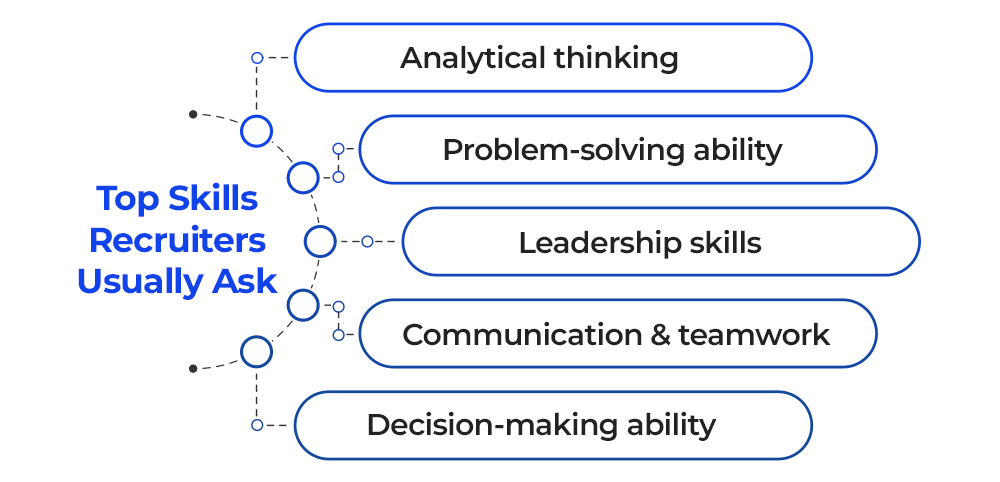
Operations management is one of the most important roles for any organization that not only helps running an organization but also helps in delivering value to the customers. They have to indulge in many processes such as increasing productivity, cost-cutting, and operational efficiency that make it easy for the company to run. During the recruitment process, the HRs usually look for those people who have good knowledge of analytical thinking, leadership skills, and problem-solving skills.
And if you are also someone who is looking for a job role such as operations executive, operations manager, supply chain analyst, or process manager, you should also have knowledge of these soft skills, such as analytical skills, teamwork, etc. Plus, there are many professional answers and questions that you have to answer while being in the recruitment process for the operations field.
In this blog, you will get to know about the top commonly asked interview questions and answers for the operations field. These questions and answers plus interview tips will not only be helpful for the fresher as well as the experienced so that they can give their interview with full confidence, but also for the interviewer.
What is operations management?
Operations management is the process of planning, organizing, and controlling business activities involved in the production of goods or services. It is primarily concerned with the management of people, technology, and resources in order to enable the organization to realize increased productivity, reduced cost, and improved quality.
The primary objective of operations management is to make sure that the company operates effectively and products or services are delivered to the customers in a time-sensitive manner. There are various departments that operations managers tend to collaborate with in order to ensure smooth operation of the business, and these include supply chain, production, logistics, and customer service.
Operations management is effective in ensuring businesses are consistent and enhance their performance as well as satisfy customer expectations. Lack of efficient operations management makes it hard to ensure efficiency and productivity in organizations.
Importance of Operations Management in Today’s Business Landscape
Operations management is the process of planning and organizing as well as controlling business activities that are involved in the production of goods or services. It is primarily concerned with the need to manage people, technology, and resources in a manner that enables the organization to be more productive, less expensive, and of higher quality.
The primary objective of operations management is to make sure that the company is efficiently operating and providing services or goods to the customers at the right time. The operations managers usually liaise with various departments like supply chain, production, logistics, and customer service to ensure that the business runs smoothly.
Operations management is also important in ensuring consistency of businesses, enhancement of performance, and customer expectations. Organizations cannot easily sustain efficiency and productivity without proper operations management.
Key Objectives of Effective Operations Management
Operation management is a very important aspect in assisting organizations to reach their objectives in the current competitive business world. To remain competitive in the market, firms should make sure that their operations are efficient and cost effective.
Among the greatest advantages of operations management is the fact that it enhances productivity and minimizes operational costs. Organizations may enhance their workflows by studying how they work and understanding where there is inefficiency and how they can more efficiently utilize the resources.
The other valuable benefit is that it assists companies in creating superior customer experiences. Efficient operations also make sure that the products or services are available when needed, and this, in turn, enhances customer satisfaction and builds trust in the brand.
In this section, you will get to know about the Basic Operations Interview Questions & Answers. This paragraph will cover FAQs for each stage, whether beginner or experienced or any level of job in the operations field.
|
Basic Operations Interview Questions & Answers | |
|
What do you mean by "operations management"?
Why do you want to work in the field of operations?
What are the key roles of an operations manager?
What are the skills that are important for the individuals who are in operations management?
|
What is the difference between operations and product management?
How do you improve operational efficiency?
What is the process of optimization?
|
In this section, you will get to know about the Intermediate Operations Interview Questions & Answers. This paragraph will cover FAQs for each stage, whether beginner or experienced or any level of job in the operations field.
|
Intermediate Operations Interview Questions & Answers | |
|
What are key performance indicators (KPIs)?
What are standard operating procedures (SOPs)?
|
What is Workflow Management?
How Do You Handle Operational Challenges?
|
In this section, you will get to know about the Advanced Operations Interview Questions & Answers.This paragraph will cover FAQs for each stage, whether beginner or experienced or any level of job in the operations field.
|
Advanced Operations Interview Questions & Answers | |
|
What is Lean Management?
What is Six Sigma?
|
What is supply chain management?
What is inventory management? Inventory management is the process of controlling and monitoring of storage and movement of products or materials in an organization. It assists in making sure that the appropriate amount of products is on hand at the appropriate moment. |
In this section, you will get to know about the Additional Operations Interview Questions. This paragraph will cover FAQs for each stage, whether beginner or experienced or any level of job in the operations field.
|
Additional Operations Interview Questions | |
|
How do you manage multiple tasks at the same time?
How do you handle pressure at work?
What strategies do you use to improve productivity?
How do you manage team conflicts?
How do you monitor operational performance?
|
How do you ensure quality in business processes?
How do you reduce operational costs?
What tools do you use for operations analysis?
Where do you see yourself in the next five years?
What motivates you to work in operations?
|
How to Prepare for an Operations Manager Interview
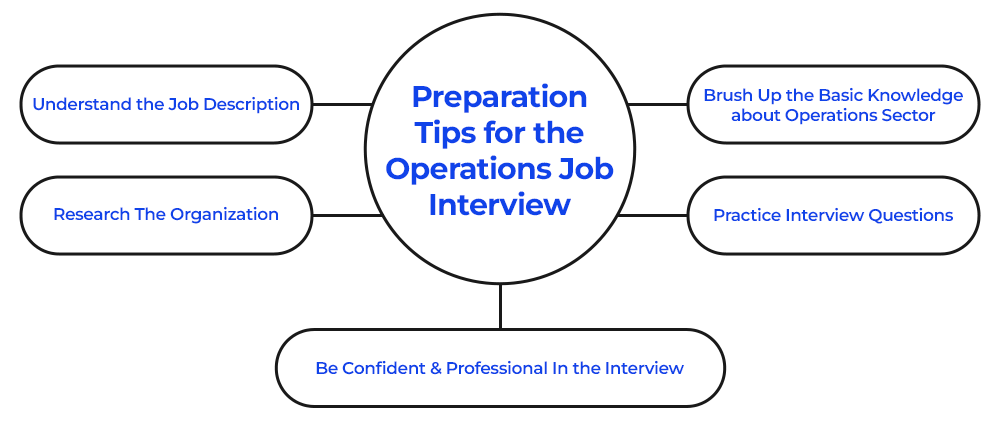
To prepare for an operations interview, one should have theoretical and practical knowledge about business processes. The applicants ought to be made aware of key operations management principles, including supply chain management, process optimization, and workflow management.
It is also important to research the company prior to the interview. Learning about the products, services, and operations of the company can also enable candidates to respond to questions better.
Applicants are also expected to think of real-life scenarios where they have been able to solve problems, come up with better processes, or be able to manage teams effectively. During interviews, it is better to share practical examples to make the recruiters know more about your abilities.
Conclusion
An operations interview is a case that would require theoretical and practical knowledge of business processes. The critical operations management concepts that the candidates should be taught are supply chain management, process optimization, and workflow management. It is also important to research the company prior to the interview. Knowledge on the products of the company, services, and operations can enable the applicants to respond to questions better.
It is also important that candidates prepare real-life examples of situations in which they were able to solve problems, enhance processes, or handle teams successfully. During the interview process, it is best to share practical examples to enable the recruiters to learn more about your capabilities.