



Quick answer: Banaras Hindu University (BHU), a central university in Varanasi, admits PhD learners without a separate written entrance test. Learners need a master's degree with at least 55% marks, or a four-year bachelor's degree with at least 75% marks, along with a qualifying route such as JRF, UGC NET, CSIR NET, ICAR-SRF, or a recognised PhD fellowship. Applications are submitted online at bhuonline.in through one of three admission modes: JRF, NET or direct admission. In JRF mode, merit is based only on the interview percentile. In NET mode, merit combines 70% weightage for the NET score with 30% for the interview percentile.
Getting a doctorate is considered the highest academic qualification, and pursuing it from an extremely recognized institution like Banaras Hindu University (BHU) is highly valued. BHU is a public central university established in 1916 in Varanasi, Uttar Pradesh. The PhD program at BHU is highly regarded due to its support for high-quality research. BHU has a history of producing the most prominent personalities in India and the world.
Banaras Hindu University (BHU) offers doctorate programs in numerous academic disciplines. It provides PhD programs in arts, humanities, social sciences, science, and engineering.

BHU is well known for its cutting-edge research facilities and highly experienced faculty support who have significant research experience. PhD candidates enrolled in Banaras Hindu University are guided and mentored by these faculty members. If you get an opportunity to pursue your doctorate from BHU, you will also get supervision from these faculty members to conduct independent and high-quality research.
|
Working Professionals Also Looking For | |
| - | |
When we think of pursuing a PhD from a highly reputed university like Banaras Hindu University (BHU), the first thing that strikes our minds is how to get admission and what the admission process is. To clear all the doubts regarding PhD admission, we will discuss the admission process for a PhD in BHU in this blog.
Why Pursue PhD from Banaras Hindu University
As discussed above, Banaras Hindu University is considered among some of the finest universities in India for its focus on research. If you are interested in pursuing a doctoral degree, BHU should in the list of your prospective universities. BHU has every facility that students require to produce high-quality research in their areas.
Here are some of the most prominent reasons why you should consider BHU for pursuing your PhD degree:
- BHU PhD offers advanced research facilities to support exceptional research in a wide range of academic domains.
- BHU provides opportunities to integrate various academic fields by supporting interdisciplinary research.
- PhD Scholars get mentorship and guidance in their research from highly experienced faculty to conduct research in the right direction.
- BHU is considered a prominent university for its research output.
- BHU ranked 5th in the NIRF 2024 ranking under the university category.
No Separate Research Entrance Test for BHU PhD Admission
Banaras Hindu University (BHU) has decided to remove the Research Entrance Test (RET) for admission to its PhD programs. It has adopted the latest amendments of the University Grants Commission (UGC) to govern its PhD admissions.Previously, BHU used to conduct its PhD admissions on two grounds. The first was based on its Research Entrance Test (RET Mode) and RET Exempted Mode for JRF Qualified Students.
Now this admission process is replaced by the latest notification of the UGC, and BHU PhD admissions will be based on the UGC NET/CSIR UGC NET examinations.

“Based on the Public Notification dated 27th March 2024 of the University Grants Commission, the Banaras Hindu University has decided that Score of UGC/CSIR NET Examination, June 2024, shall be used for admission to the Ph.D. program for the academic session 2026-27, and no separate Research Entrance Test will be conducted by the university."
BHU has announced this decision by a notification on the official website. Now, PhD candidates who are willing to pursue their doctorate from BHU and other universities are not required to take multiple entrance tests.BHU has decided not to conduct any separate entrance exams for admission to its PhD program. From the session 2026-2027, BHU PhD admission will be based on the performance of the applicants in the UGC NET/CSIR UGC NET exams.
|
Working Professionals Also Looking for | |
BHU PhD Admission Modes: JRF, NET and Direct Admission
Banaras Hindu University (BHU) admits PhD learners through three modes: JRF mode, NET mode, and direct admission. The mode you apply through decides how your merit is calculated. In JRF mode, merit is based only on the interview percentile. In NET mode, merit is calculated out of 100, with 70% weightage for the NET score and 30% for the interview percentile. Direct admission is for holders of recognised PhD fellowships and for senior professionals who meet the experience and age conditions. All applications are submitted online at bhuonline.in
BHU PhD Admission Modes at a Glance
|
JRF Mode |
NET Mode |
Direct Admission | |
|
Who can apply |
Learners with JRF from UGC, CSIR, ICMR, DBT or another national agency |
UGC NET or CSIR NET qualified learners in Category 1, 2 or 3, and ICAR-SRF (PhD) holders for Agricultural Sciences |
Holders of recognised national or international PhD fellowships, and senior professionals with 12 or more years of experience and a minimum age of 43 |
|
Who cannot apply |
NET-only candidates and candidates qualified for Assistant Professor without JRF |
Candidates without a valid NET qualification from the accepted sessions or ICAR-SRF |
Candidates who do not hold a recognised fellowship or meet the senior professional conditions |
|
How merit is calculated |
Interview percentile (100%) |
NET score (70%) + interview percentile (30%) |
As per university norms; senior professionals need prior approval of the Vice Chancellor |
|
Seat type |
Seats allotted to JRF mode |
Seats allotted to NET mode |
Fellowship holders are admitted on supernumerary seats |
NET Category vs BHU Admission Mode: What Is the Difference?
Your UGC NET category and your BHU admission mode are two separate things.
Your NET category is assigned by the National Testing Agency (NTA) and appears on your UGC NET scorecard. It tells you what you have qualified for, and it applies across all universities.
Your BHU admission mode is selected on the BHU PhD application form. It decides how BHU ranks you in the merit list.
|
UGC NET Category |
What the Learner Has Qualified For |
BHU Mode Available |
|
Category 1 |
JRF, Assistant Professor and PhD admission |
JRF mode or NET mode |
|
Category 2 |
Assistant Professor and PhD admission, without JRF |
NET mode |
|
Category 3 |
PhD admission only |
NET mode |
In the UGC NET June 2026 result, 4,241 candidates qualified in Category 1, 45,904 in Category 2, and 97,434 in Category 3. This means NET mode is the admission route for most learners applying to BHU.
JRF Mode: Eligibility and Merit
Who is eligible: Learners who have qualified for the Junior Research Fellowship (JRF) through UGC, CSIR, ICMR, DBT, or any other national agency.
Who is not eligible: Learners who qualified UGC NET for Assistant Professor without JRF (Category 2) or for PhD admission only (Category 3). These learners apply through NET mode.
How merit is calculated: Merit in JRF mode is based entirely on the interview percentile computed by the university. The NET score does not add to the merit score in this mode.
What this means for learners: Since the interview decides the entire merit, preparation for the departmental interview carries the most weight. Departments may ask learners to submit a research proposal or present their research interest during the interview. Check the requirements of your department in the admission bulletin.
NET Mode: Eligibility, Accepted Sessions and the 70:30 Formula
Who is eligible:
- Learners who qualified UGC NET or CSIR NET in Category 1 (JRF), Category 2 (Assistant Professor without JRF), or Category 3 (PhD admission only)
- Learners with ICAR-SRF (PhD) for admission in Agricultural Sciences
Which NET sessions are accepted: In the admission cycle that opened in December 2025, BHU accepted UGC NET and CSIR NET results from the December 2024 and June 2025 sessions. These were the two sessions held before that cycle. Following the same pattern, the next cycle is expected to accept the December 2025 and June 2026 sessions. Confirm the accepted sessions in the official bulletin once it is released.
How merit is calculated: Merit in NET mode is calculated out of 100 using two components.
|
Component |
Weightage |
|
Score in the qualifying exam (UGC NET or CSIR NET) |
70% |
|
Interview percentile, as computed by the university |
30% |
|
Total |
100 |
Merit Score = (NET score component x 0.70) + (Interview percentile x 0.30)
Worked example (for illustration only):
|
Learner A |
Learner B | |
|
NET score component |
90 |
80 |
|
Interview percentile |
70 |
95 |
|
NET contribution (70%) |
63.0 |
56.0 |
|
Interview contribution (30%) |
21.0 |
28.5 |
|
Final merit score |
84.0 |
84.5 |
Learner B ranks above Learner A despite a lower NET score, because the interview carries 30% of the total. The exact method BHU uses to convert NET scores for this calculation is given in the admission bulletin.
What this means for learners: A strong NET score gives you an advantage, but it does not decide your rank on its own. Interview performance can change your position in the merit list.
Direct Admission: Fellowship Holders and Senior Professionals
Direct admission covers two groups of candidates.
- Holders of recognised PhD fellowships
Candidates who hold a nationally or internationally recognised PhD fellowship, at par with UGC, CSIR or ICAR fellowships, are admitted under a supernumerary quota. Supernumerary seats are created over and above the regular seats, so these admissions do not reduce the seats available to learners applying through JRF mode or NET mode.
- Senior professionals
A candidate holding a senior management position may be considered for PhD admission with prior approval of the Vice Chancellor. The candidate must meet both of these conditions:
|
Condition |
Requirement |
|
Work experience |
At least 12 years |
|
Age |
At least 43 years |
Meeting these conditions makes a candidate eligible for consideration. Admission depends on the approval of the Vice Chancellor and the university's norms.
Provision for In-Service Candidates at BHU
Candidates who meet the eligibility criteria and work at BHU in one of the following roles are considered for seats reserved under a separate provision:
- Research personnel working in an externally funded research project in the university
- Permanent teachers of the university
- Permanent non-teaching employees of the university
The number of seats and the selection process under this provision are specified in the admission bulletin.
Which BHU PhD Admission Mode Applies to You?
|
Your Qualification |
Mode to Apply Through |
Merit Based On |
|
JRF through UGC or CSIR NET (Category 1) |
JRF mode or NET mode (check the bulletin on whether you can apply in both) |
Interview only (JRF mode) or 70:30 formula (NET mode) |
|
JRF through ICMR, DBT or another national agency |
JRF mode |
Interview only |
|
UGC NET or CSIR NET, Category 2 |
NET mode |
70:30 formula |
|
UGC NET or CSIR NET, Category 3 |
NET mode |
70:30 formula |
|
ICAR-SRF (PhD), for Agricultural Sciences |
NET mode |
70:30 formula |
|
Recognised national or international PhD fellowship |
Direct admission |
As per university norms, on supernumerary seats |
|
Senior management role, 12 or more years of experience, age 43 or above |
Direct admission |
Subject to prior approval of the Vice Chancellor |
|
No NET, JRF, ICAR-SRF or recognised fellowship |
Not eligible under the current modes |
Qualify in an upcoming UGC NET or CSIR NET session to become eligible |
What Happens to Seats That Remain Vacant?
If seats remain vacant after the first round, BHU conducts a second cycle of admissions. In the last cycle, the second cycle was scheduled to begin on 12 February 2026. Seats that remain vacant in one mode are transferred to the other mode.
For learners who are not selected in the first round, this means a second opportunity may open. Keep checking bhuonline. in for the second-cycle notice after the first-round results are published.
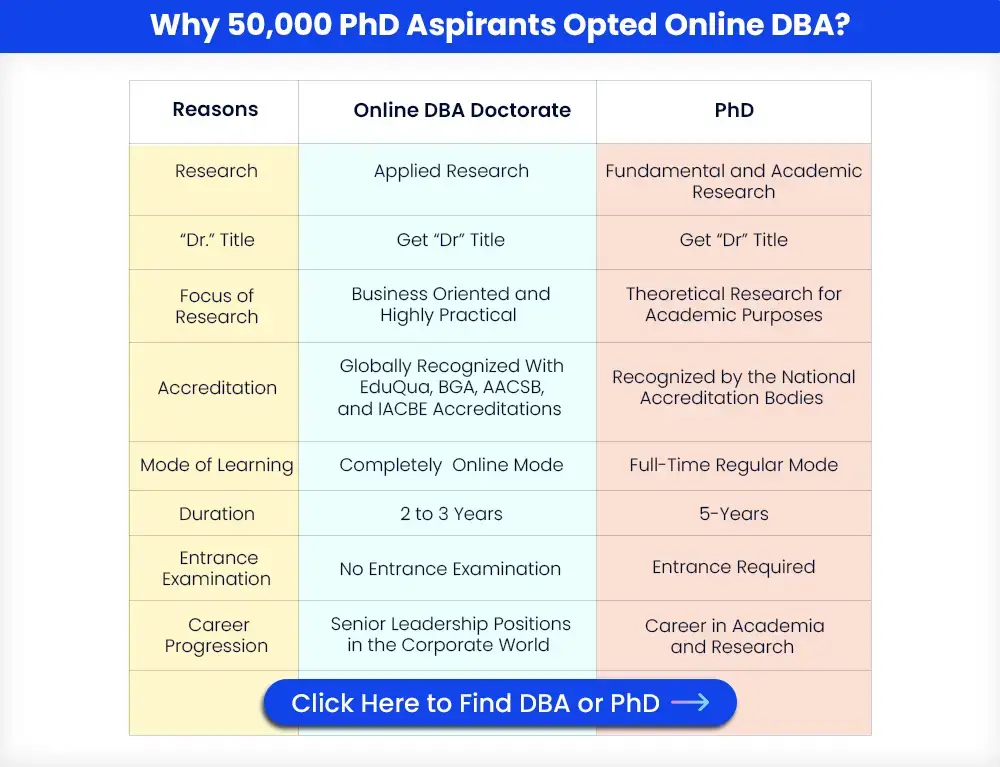
If you are looking for a flexible PhD program from a globally recognized university, you can enroll in Online DBA (Doctorate of Business Administration). This program is highly flexible and equivalent to an On-campus PhD in India and worldwide. Moreover, you can complete an Online DBA in just 3 years and obtain a “Dr” title.
|
Top Online DBA Doctorate Specialization | |
BHU PhD Admission Process: Step-by-Step
BHU does not conduct a separate written entrance test for PhD admission. Candidates apply online at bhuonline.in, select an admission mode (JRF, NET, or direct admission), attend document verification and an interview, and are selected through a merit list. In JRF mode, merit is based only on the interview percentile. In NET mode, merit is calculated with 70% weightage for the NET score and 30% for the interview percentile.
Step 1: Fill the Online Application Form
Keep these ready before you apply: a valid email ID, mobile number, scanned photograph and signature, and a credit card, net banking account, or ATM-cum-debit card for payment.
- Visit bhuonline. in and open the PhD admission link.
- Register using your email ID and mobile number.
- Select your admission mode: JRF, NET, or direct admission.
- Enter your academic and qualifying exam details, and select your department.
- Upload your scanned photograph and signature.
- Pay the application fee online.
- Submit the form and save a copy.
Submitting the form confirms your application, not your admission.
Step 2: Use the Correction Window
BHU opens a short correction window after registration closes. In the last cycle, it was open for one day. Review your admission mode, department, and exam details before final submission.
Step 3: Download Your Call Letter
BHU issues call letters for document verification and the interview. The call letter lists the date, department, and documents to carry.
Step 4: Attend Document Verification and Interview
Document verification and the interview happen together at the department. In the last cycle, interviews for Arts, Social Sciences, Medicine, Ayurveda and Science ran from 5 to 16 January 2026. Interviews for Commerce, Education, Law, Management Studies, Agricultural Sciences and other faculties ran from 10 to 16 January 2026. Carry the original documents listed in your call letter. Departments may also ask you to present a research proposal.
Step 5: Check the Merit List and Pay the Fee
|
Admission Mode |
Merit Calculation |
|
JRF mode |
Interview percentile (100%) |
|
NET mode |
NET score (70%) + interview percentile (30%) |
Selected candidates receive an offer letter and a fee payment link on the portal. Pay the admission fee within the window given in the offer letter.
Step 6: Report to the Department
After paying the fee, report to your department on the date announced by the university to complete joining formalities.
Banaras Hindu University (BHU) PhD Subjects
Banaras Hindu University (BHU) offers PhD (Doctor of Philosophy) in numerous academic disciplines.
Here is the list of all the PhD subjects offered at BHU:
|
List of All BHU PhD Subjects | ||
|
Ph.D in Agad Tantra |
Ph.D in Dravyaguna |
Ph.D in Kayachikitsa |
|
Ph.D in Kriya Sharir |
Ph.D in Medicinal Chemistry |
Ph.D in Panchakarma |
|
Ph.D in Prasuti Tantra |
Ph.D in Rachana Sharir |
Ph.D in Rasa Shastra & Bhaishjya Kalpane |
|
Ph.D in Samhita & Sanskrit |
Ph.D in Shalakya Tantra |
Ph.D in Shalya Tantra |
|
Ph.D in Siddhanta Darshan |
Ph.D in Swasthavritta & Yoga |
Ph.D in Vikrit Vigyan |
|
Ph.D in Applied Microbiology |
Ph.D in Biochemistry |
Ph.D in Biotechnology |
|
Ph.D in Bioinformatics |
Ph.D in Botany |
Ph.D in Chemistry |
|
Ph.D in Computer Science |
Ph.D in Environmental Science |
Ph.D in Geography |
|
Ph.D in Geology |
Ph.D in Home Science |
Ph.D in Human and Clinical, Genetics |
|
Ph.D in Mathematics |
Ph.D in Mathematical Sciences |
Ph.D in Molecular and Human Genetics |
|
Ph.D in Physics |
Ph.D in Statistics* |
Ph.D in Zoology |
|
Ph.D in A.I.H.C. & Arch. |
Ph.D in History of Art |
Ph.D in Journalism & Mass Communication |
|
Ph.D in Bhojpuri evam janpadiya adhyan |
Ph.D in Chinese |
Ph.D in English |
|
Ph.D in French Studies |
Ph.D in German |
Ph.D in Hindi |
|
Ph.D in I.P.R. |
Ph.D in Pali & Buddhist Studies |
Ph.D in Philosophy |
|
Ph.D in Physical Education |
Ph.D in Russian |
Ph.D in Sanskrit |
|
Ph.D in Hindi Translation |
Ph.D in Urdu |
Ph.D in Experimental Medicine & Surgery |
|
Ph.D in Community Medicine |
Ph.D in General Surgery |
Ph.D in Geriatric Medicine |
|
Ph.D in Nephrology |
Ph.D in Pediatrics |
Ph.D in Pediatrics Surgery |
|
Ph.D in Surgical Oncology |
Ph.D in Vocal |
Ph.D in Economics |
|
Ph.D in Psychology |
Ph.D in Subaltern Studies |
Ph.D in Women Studies |
|
Ph.D in Education |
Ph.D in Law |
Ph.D in Human Rights & Duties Education. |
|
Ph.D in Management Studies |
Ph.D in Commerce |
Ph.D in Environment Sciences |
|
Ph.D in Integrated M.Phil-Ph.D. Programme in ESD |
Ph.D in Agricultural Statistics |
Ph.D in Entomology |
|
Ph.D in Fruit Science |
Ph.D in Floriculture and Landscaping |
Ph.D in Vegetable Science |
|
Ph.D in Plant Physiology |
Ph.D in Plant Pathology |
Ph.D in Genetics and Plant Breeding |
|
Ph.D. in Biochemistry |
Ph.D in Computer Science & Engineering |
Ph.D in Computational Biology and Bioinformatics Track - 1 (TROH) |
|
Ph.D in Computational Biology and Bioinformatics Track - 2 (TRTH) |
Ph.D in Computational Biology and Bioinformatics Track - 3 (TRDH) |
Ph.D in Ph.D. in Sociology |
|
Ph.D. in History |
Ph.D. in Political Science |
Ph.D. in Instrumental (Sitar) |
|
Ph.D. in Instrumental (Flute) |
Ph.D. in Instrumental (Tabla) | |
|
Popular PhD Specializations in India! | |
Eligibility Criteria for BHU PhD Admission
If you are willing to enroll in a BHU PhD program, you must fulfill all the eligibility requirements set by the university. You must meet all the eligibility criteria before applying.
If you do not meet the eligibility requirements, your PhD application will not be considered by BHU.
The Eligibility criteria for BHU PhD admission are mentioned below:
- Completed Master’s degree or equivalent in a relevant discipline from a recognized university/institution with at least 55% marks.
OR
- Completed 4 Year/ 8 Semester Bachelor’s degree from a recognized University/Institution with a minimum of 75% in aggregate.
- Must have qualified UGC NET/CSIR UGC NET within one year of application.
- Students in their final year with UGC NET/CSIR UGC NET qualification can also apply.
Duration of PhD at BHU
The duration of PhD(Doctor of Philosophy) at Banaras Hindu University (BHU) ranges between 3 years and 5 years. This duration can be further extended for 1 or 2 years after prior approval of the Departmental Research Committee and the supervisor. PhD Scholars failing to submit their Thesis/Dissertation within this stipulated time will not be given any further extension, and their candidature will be suspended.
However, if you are looking for a doctoral degree that can be completed in less time and offers flexibility, you can join the Online DBA program. The duration of this program is 3 years. This program is designed for working professionals and business executives who cannot quit their jobs to pursue on-campus PhD programs.
How Difficult is the BHU PhD Admission Process?
Being a central university, Banaras Hindu University (BHU) is among the top choices for pursuing a doctorate. This attracts thousands of applications every year for PhD admission. With the limited number of seats for PhD in BHU, most of the students are eliminated in the admission process. The admission process for a PhD at BHU is highly competitive and difficult.
From the session 2024-25, Banaras Hindu University (BHU) is adopting the amendments of the University Grants Commission (UGC) in PhD admission exams. Now, BHU will not conduct separate entrance exams for PhD admissions; it will now be based on performance in the UGC NET/CSIR UGC NET.
BHU has abolished the Research Entrance Test (RET) from the 2024- 25 session. This has made the PhD admission more complex and challenging. However, with continuous dedicated preparation and persistence, one can easily secure a PhD seat at Banaras Hindu University (BHU).