


If you completed your master’s and are now interested in research then PhD will be an ideal career choice for you as it involves a lot of research. There are various reasons to pursue a PhD program firstly, it is the highest qualification in academics, and secondly, it is to become an expert in your chosen field.

Moreover, you can also apply for various job roles after completing the program. Having this degree adds up the “Dr” title before your name. Read this full article to learn everything that must know regarding the PhD program.
What are PhD programs?
The acronym "PhD" represents "Doctor of Philosophy," derived from the Latin "philosophiae doctor." A PhD proves one's knowledge in a certain topic. In contrast to several other doctorate programs that involve instruction, PhD candidates mostly concentrate on their own research. This study needs to be novel, fresh, and deserving of publication as a thesis. The primary evaluation criteria for a PhD are the caliber and originality of the student's research project.
Types of PhD Programs
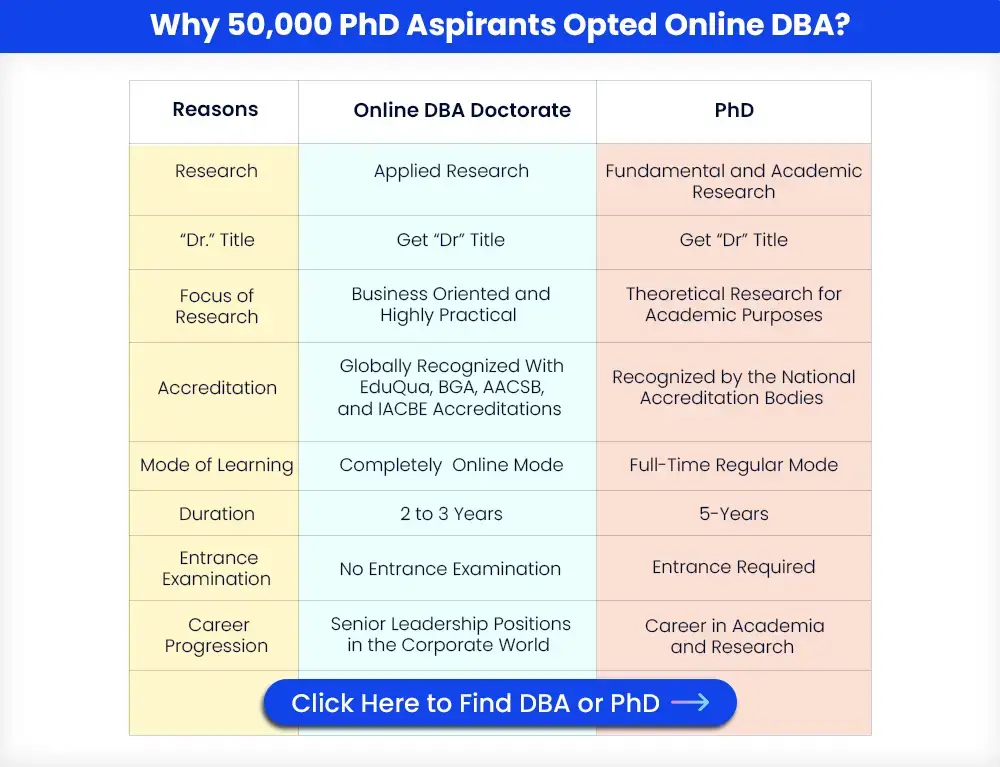
There are various types of PhD Programs. Some of them are mentioned below :
1) Regular PhD Program
In a regular PhD program, you have to attend classes regularly and the duration to complete it is a minimum of 5-7 years. Furthermore, you have to take an entrance exam if you want to opt for a regular PhD program. Moreover, you also have to be completely focused on research.
2) Part-Time PhD Program
This Part Time PhD program is specially designed for working professionals and the duration to complete it is a minimum of 4 to 6 years. You need to attend an evening class in it. Candidates working in reputed research organizations, academic institutes, or industries near the campus are usually granted part-time PhDs.
A part-time PhD takes 7-8 years to complete, as students must fulfill the same academic credits and requirements as full-time students. Part-time PhD students attend a limited number of classes. They must have at least 1 year of work experience and an NOC from their employer. Part-time Ph.D. focuses on research that benefits the company rather than individual research.
3) Online PhD Program
Online PhD is still not recognized by the UGC, hence it is not a valid option but you can opt for an alternative which is an Online DBA (Doctor of Business Administration) it is also a doctorate program and can be completed in a minimum of 3-5 years. Moreover, you also do not need to visit college to pursue it.
4) PhD Distance Learning
Distance PhDs are also called distance doctoral programs at some institutions. This degree offers the same career prospects as a full-time PhD. The duration is 3-5 years. You need a graduation degree with 5+ years of work experience.
5) PhD for Working Professionals
It might be difficult to pursue a Ph.D. while working a full-time job. Nonetheless, a lot of colleges provide working people with flexible curriculum options. These courses assist students in juggling employment and education. To pursue this phd for working professionals program you must have a Master's degree with a minimum of 60% marks, work experience, and a valid GATE/NET score (if applicable)
6) PhD Global
A Global PhD is a PhD for working professionals that can be pursued from a foreign university. It is a little different from a PhD program offered in an Indian university in terms of eligibility criteria, selection process, fees, syllabus, and job roles. In this mode, you have to pass the entrance exam and once you pass it only then you can apply for a PhD Global program.
7) PhD Abroad
The duration of a Ph.D. program abroad is three to six years, with ample chances. To get admitted, candidates must pass entrance examinations such as the GMAT, SAT, GRE, TOEFL, and IELTS. Ph.D. programs are offered by prestigious universities in the United States, United Kingdom, Germany, Australia, Japan, Canada, Singapore, and France.
8) Integrated PhD Program
This integrated doctoral program is comprehensive and incorporates both a master’s and a doctorate program. The duration to complete it is a minimum of 5-6 years. You can apply for this program right after your bachelor’s.
How many students opted for a Regular PhD Program and a Part-Time PhD Program?
According to Pulse survey data, most students are interested in full-time PhDs, but those in the upper age groups (45+ years) are more likely to consider part-time (37% versus 15% between 18-44-year-olds).
- Regular PhD Program - 15%
- Part-Time PhD Program—37%
What is the Scope of a PhD program in India?
The scope of PhD in India is wider than just earning a degree. It is far beyond it. It opens doors to many new exciting job opportunities. Through this, you can make impactful changes in the society. Let’s learn more about it and delve into it.
Academics and Research
- In a PhD program, you will learn all the knowledge and skills to conduct your original research; it encourages you to push your boundaries way beyond your thinking and discover various new things.
- Many graduates of PhD programs think of pursuing a career in academics. You can also become a professor and guide various students in their research journey.
- Through research fellowships, you can refine your research skills and partner with renowned researchers at universities.
Research and Development (R&D)
- Many companies have their own research and development departments which give jobs to PhD scholars to cope up with the complex challenges and they also contribute to innovating new ideas.
- The research skills that you develop while pursuing a PhD program make you stand out from the crowd as you can assist better in the development of new products, processes, solutions, and many more.
- The major advantage of pursuing a PhD program is that you get a high salary package in comparison to the different programs.
Policy and Government Roles
- You know that you can advise policymakers on critical issues with your specialized knowledge of the field.
- Many government research organizations give employment to the PhD graduates to do research that is relevant to public policy, national security, and other relevant important areas of the nation.
- By pursuing a PhD program, you can become a bridge between academics and government you will ensure that your findings will contribute to the society's progress.
Who can apply to a PhD program in India?
To be eligible for an entrance exam for a PhD, you must fulfill the mentioned eligibility criteria :
- You must have completed your master’s from a government-recognized university with a minimum mark of 50-55 percent.
- Next, you also need to pass the entrance exam.
- Later, you have to pass the interview round.
Entrance Exam for PhD in India
There is a list of entrance exams for PhD. Some of them are mentioned below:
CSIR UGC-NET: The Joint CSIR-UGC NET is a test for Indian nationals.
It determines eligibility for :
- Junior Research Fellowship and Assistant Professor.
- Assistant professor and Ph.D. admission.
- Ph.D. admission only.
- It applies to Indian universities, colleges, and R&D establishments.
JNU PhD Entrance: Admission to JNU is based on the All India Level Entrance Examination.
For Ph.D. selection through a Computer-Based Test (CBT):
- Candidates are called for a viva voce.
- The final merit list is 70% based on the CBT score and 30% based on the viva voce.
- BITS PhD Entrance Exam: If you want to pursue a PhD program from BITS, you must have fulfilled all the eligibility criteria mentioned below
- Candidates need an M.E./M.Pharm./MBA/M.Phil. or equivalent with at least 60% aggregate for Ph.D. admission.
- Alternatively, those with an M.Sc./B.E. or equivalent with a minimum of 60% can also be provisionally admitted.
- For Ph.D. programs in languages and humanities, candidates with an M.Phil/MA and at least 55% aggregate may also be considered.
- Candidates admitted under this scheme must commit full-time to their Ph.D. research and refrain from taking other assignments until the final thesis submission.
- GATE Exam: The GATE exam opens doors to prestigious Masters and PhD programs. It also offers opportunities for technical positions in PSUs. GATE scores enhance job prospects in both public and private sectors. Especially in fields like engineering, technology, and research.
- AIIMS PhD Entrance Exam: The AIIMS PhD entrance exam is highly competitive. It assesses candidates' knowledge, aptitude, and research skills. The exam is typically held twice a year, in January and July sessions.
- Symbiosis PhD Entrance Exam: The University admits students who qualify for fellowships or scholarships in national-level tests like UGC-NET, UGC-CSIR NET, GATE, etc. Alternatively, students may be admitted through an Entrance Test conducted by the university. The syllabus for the Entrance Test will include 50% research methodology and 50% subject-specific topics. Students scoring 50% marks in the entrance test are eligible for the interview.
Fees that we need to pay to pursue A PhD In India
Fees of the program differ from university to university and specialization to specialization. However, fees for a government college lie between Rs. 10,000- Rs. 50,000 per annum. Whereas fees of a government college lie between Rs. 70,000 to 3.5 lakhs per annum.
How to Apply for a PhD Program:
Follow the simple steps to apply for a PhD program. Check the given steps below:
- Step 1. Check out all the specializations the institution offers and the details about the specialization you want to pursue by visiting the official university website.
- Step 2. In order to complete the application, you must check the university's official website since they post the announcement of the admission there.
- Step 3. The application must be submitted by the deadlines the university specifies. It is recommended that you provide all essential documentation for admission.
- Step 4. Remember that certain colleges may want a research proposal in addition to the application; thus, you should prepare one beforehand.
- Step 5. Universities will pick the candidates who can take an admission exam after reviewing your application.
- Step 6. After clearing both rounds of testing, you will be assigned research mentors or PhD research supervisors.
What Do We Need to Prepare for a PhD Program Entrance Exam?
The entrance exam of Delhi University for a PhD is divided into 2 parts. Each part holds a weightage of 50 percent marks.
| The entrance exam of Delhi University for PhD | |
|
Research Methodology |
|
|
Mathematical Tools for Research in Computer Science (part of Research Methodology) |
|
|
English Comprehension |
|
|
Computer Science (Subject Specific) |
|
What are some popular PhD program streams and their syllabi?
A PhD, or Doctor of Philosophy, offers courses in many fields. Some major streams include science, arts and humanities, and management. There are many PhD courses available in India. The table below shows the syllabus for some PhD courses by stream:
Science Stream: Check the table below to know the topics you will get to learn in the science stream.
| learn in the science stream | |
|
Advanced Computer Algorithms |
Distributed COM |
|
Advanced Database Management Systems |
Distributed File System |
|
Advanced Software Engineering |
Distributed Systems |
|
Component Object Model (COM) & interfaces in COM |
Dynamic Programming |
|
Computer Architecture |
Frequencies for Radio Transmission |
|
Computer System Design |
Medium Access Control |
|
CORBA, JAVA, and object web |
Multiprocessor Architecture |
Management Stream: Check the table below to know the topics you will get to learn in the management stream.
| learn in the Management stream | |
|
Computer Applications |
Logistics |
|
Dissertation |
Marketing |
|
Elective I |
Operations Management |
|
Financial Management |
Project Work |
|
General Management |
Quantitative Analysis |
|
Human Resource Management |
Research Methodology |
|
Information Technology Management |
Retail Merchandising |
Art and Humanities Stream: Check the table below to know the topics you will get to learn in the Art and Humanities stream.
| Learn in the Art and Humanities stream | |
|
Advanced Course in Logic |
Communication Theory |
|
Advanced Course in Philosophy of Science |
Data Collection and Organization |
|
Advanced Course in Formal Methods |
Decision Theory |
|
Advanced Econometric Methods |
Environment and Development |
|
Advanced Economic Theory |
Environment Philosophy |
|
Advanced Macroeconomics Theory |
Fieldwork |
|
Advanced Microeconomics Theory |
Governance and the Political Economy of Development |
Course Structure of PhD Programs In India
- Candidates must submit their research proposal and research topic after being chosen for PhD courses. After that, a research guide or supervisor is appointed to them.
- Candidates are given information on the teaching schedule, methods of evaluation, and course content. The majority of institutes need progress updates on research projects every six months.
- During their research duration, PhD candidates are required to present in at least two seminars and submit a certificate to the Research Unit. Before presenting their thesis, you must also submit a certificate to the research unit and publish a minimum of one research publication in a peer-reviewed journal.
- A pre-submission seminar will be arranged by the supervisor before the thesis is submitted. Recommendations for enhancement will be gathered in this seminar and must be incorporated by the candidate in their final thesis.
- A thesis summary must be submitted by candidates forty-five days before the final submission. The thesis is submitted in hard copy as well as soft copy, and outside specialists examine it should changes be recommended, the candidate is required to submit a revised thesis.
- Lastly, applicants defend their theses in front of an expert panel during a viva voce. Upon fulfillment of these requirements, the applicant is awarded a PhD.
How Much Stipend Do You Get In PhD Programs In India?
- Research: Researchers and PhD candidates now get higher stipends from the Ministry of Education.
- Junior Research Fellows (JRFs) would now get a monthly salary of Rs 37,000 instead of Rs 31,000 as before. Senior Research Fellows (SRFs) would now receive Rs 42,000, up from Rs 35,000 by 20%.
- The stipends for Research Associates (RAs) have been increased, the RA-I level will now receive Rs 58,000, the RA-II level will receive Rs 61,000, and the RA-III level will receive Rs 63,000 (up from Rs 54,000).
Colleges Offering a PhD In India
There are various government and private colleges offering a PhD program, Some of them are mentioned below :
|
Institute |
Exams Accepted |
|
Jawaharlal Nehru University |
UGC NET-JRF |
|
University of Delhi |
NET/JRF |
|
Hidayaullah National Law University |
Entrance Exam, UGC NET JRF |
|
Aligarh Muslim University |
University Entrance Exam, UGC NET JRF |
|
Mizoram University |
University Entrance Exam, UGC NET JRF |
|
North Eastern Hill University |
Entrance Exam, UGC NET JRF |
|
Amrita Vishwa Vidyapeetham |
GATE |
|
Manipal University |
PhD Manipal Entrance Test (MET) |
|
VIT Vellore |
VITREE |
|
KIIT University |
KIITEE |
|
BITS Pilani |
BITS PhD Entrance Exam |
|
Bharathidasan University |
University-Level Exam |
The Alternative of a PhD Program in India
If in case you are searching for an alternative to a PhD program, you can opt for an Online DBA program, it is also a doctorate program and adds up a “Dr” title before your name.
Moreover, it offers you various advantages, such as not having to visit college daily. You can complete an Online DBA in a minimum of 3-5 years whereas PhD takes a minimum of 5-7 years to complete it. Furthermore, in an online DBA, international faculties teach you.
Many universities are offering an online DBA. Some of them are mentioned below :
|
Universities |
Fees |
|
INR 8,14,000 | |
|
INR 8,12,500 | |
|
INR 8,14,000 |
Conclusion
In India, PhD scholars are well respected in the market. Moreover, you become an expert in the field. Furthermore, you can opt for an Online DBA program, if you do not want to visit a college daily.